East Village Art View
Founded by artist Julia Justo, East Village Art View is an inclusive exhibition space in a NYC apartment. It uses the traditional format of a gallery setting to mitigate and confront systemic problems of exclusiveness in the arts. It seeks to provide a platform for presentation of projects by overlooked and marginalized communities as well as to create dialogue between artists and audiences on a global stage.
Hours: Thursdays and Fridays by appointment
111 3rd Avenue, #15H, New York, NY 10003 juliart5@hotmail.com (917) 859-9026
Instagram @eastvillageartview
Facebook @EastVillageArtView

Thread in Motion
curated by Blanka Amezkua
Opening Reception: Sun. April 17, 2022, 4pm - 7pm
Thread in Motion is a group exhibition showcasing embroidery artwork created from January through May 2018 inside different public and private spaces in New York City.
Participants: Damali Abrams, Maricella Z. Infante, Devin Osorio, Susan Joy Rippberger, Nadia Salcedo, Rene Valdez.
Invited artist: Fanny Allie, Gabriel Garcia Roman, Georgia Lale, Amalia Meira, Iviva Olenick
Duration: April 17 - April 30, 2022
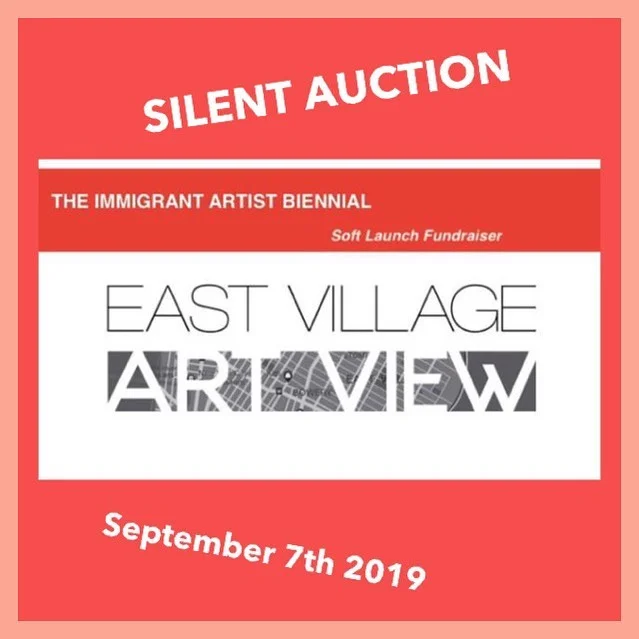
the immigrant artist biennial Exhibition and auction
BIDDING OPEN 6-8 PM
September, 7th 2019
Artists: Keren Anavy, Graciela Cassel, Eva Davidova, Ana Maria Farina, Gina Goico, Loretta Lomanto, Sania Samad, Liza Sokolovskaya, Tatiana Soteropoulos, Gene Tanta, Beverly Tu, Kohei Urakami, Keiko Nabila Yamazaki.
Poets: Marina Blitshteyn and more TBA
The Immigrant Artist Biennial-TIAB is a multi-disciplinary multi venue exhibition of critically engaged contemporary art made by immigrant artists from around the world, based in US. Premiering in Spring/Summer 2020 in NYC, TIAB sets out to form an international dialogue through exhibition of ambitious projects, performances, panels, etc with an aim to facilitate a diverse and experimental discourse as well as build a globally connected and united community in the times of extreme anti-immigrant sentiment, unrest, discrimination and exclusion.
The Immigrant Artist Biennial seeks to develop urgent and innovative relationship between artists and audiences. Established and directed, by Immigrant Artist, Curator, Organizer and Educator, Katya Grokhovsky and led by a team of arts professionals, TIAB seeks to create a platform for exchange and presentation of projects by often overlooked and silenced voices.
art is money-money is art
PRESS RELEASE
East Village Art View
111 Third Avenue, # 15H, New York, NY 10003
(917) 859 9026
juliart5@hotmail.com
Hours: Thursdays and Fridays by appointment
CURATED BY EDOARDO MARCENARO
Opening Reception: Friday April 26, 6 - 8 PM, 2019
Duration: April 26 - May 11
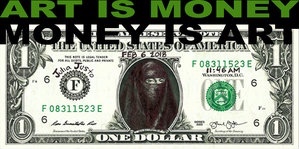
Edoardo Marcenaro presents his collection of artworks made on actual $1 bills. The exhibition includes works by Banksy, Andy Warhol, Keith Haring, Obey and more than 100 local artists.
Artists show how fluid the nature of money is, as its very transformation demonstrates a change in its value when rebuilt as art.
Artists do so as a method to ironize, undermine, sabotage and subvert the power of money. Though these re-designed banknotes are mischievous in nature, many pieces offer distinctive and provocative social criticisms. This unique exhibition explores concepts of wealth, power, equity, justice and creativity.
Art is Money Money is Art Artists: Yasmeen Abdallah, Jack Ader, Nelson Alvarez, Cesar O Alvarez, Enely Turbi Alvarez, Blanka Amezkua, Luigi Anchisi, Andora, Janice Aponte, Theo Applebaum, Mark Araujo, Marcela Ariaz, Mehdi Ashlaghi, Mike Asente, Banksy, Gigi Barrett, Sasha Berson, Michael Blitzer, Leenda Bonilla, Rafael Manuel Calvo Gonzalez, Benjamin Casiano, Victor Castillo, Clare Cooper, Jim Costanzo, Angela Costanzo Paris, Michael Crenshaw, Monika Dahlberg, Ava Day, Joshua Dean, Cristian Delhez, Violet DeLuca, Paul DeRienzo, Mimi Dobelle, Tia Dunn, Savior Elmundo, Klay-James Enos, Nicky Enright, Jonah Feinberg, Betsy Fields, Diana Francia, Danny Gall, Diane Garcia, Marcus Glitteris, Joel Grayson, Oscar Green, Daniel Greer, Goldie Gross, Ellen Hanauer, Piotr Hanzelewicz, Keith Haring, Roshan Houshmand, Harris Hussein, Sally Jerome, Candy Justo, Julia Justo, Nicole Kagan, David Kanovich, Will Kaplan, Sue Karnet, Sojung Kim, Noelle King, Lesley Koenig, David Korn, Cole Kosarin, Ishikaa Kothari, Salem Krieger, Yonko Kuchera, Alexander Kumar, Nina Kuo, Eric Lamendola, Lisa Lamontanaro, Diane Lang, Sage Lappas, Norah Larry, Jenna Lash, Cole Lazerow, Daniel Levey, Wayne Lucina, Rafaela Luna, Jai Malhotra, Yvan Mas, Rene Maynez, Neel McDonald, Kayley McGonagle, Alex McIntosh, Ryan McKinney, Jason Mena, Josh Merrow, Patricia Miranda, Aida Miro, Will Moller, Sascha Mombartz, Sophia Monaco, Consuelo Mura, Spencer Myers, Alison Newmark, Nick & Chaos, Obey, Joana O Leary, Sean O’Toole, Luis Pagan, Arjun Pal, Dani Palin, Mauricio Paz Viola, Patricia “Lady P” Perez, Yolanda Petrocelli, Alejandro Pinzon, Lina Constanza Porras Garcia, Victoria Quiroz-Becerra, Asya Reznikov, Katherine Rodriguez, Lorin Roser, Hugo Rojas, Cindy Rosario, Jason Ruff, Arlene Rush, Patience Rustomji, Anna Sang Park, Jack Schenker, John Sebastian, Sam Seeherman, Jordan Segal, Martin Segobia, Ben Seklir, James Senzer, Izzy Shin, Celine Shon, Ben Siegel, Kimberly Silverman, Peter Simon, Amy Sinclair, Barbara Slitkin, Jose Soto, Rachel Sporn, Priscilla Stadler, Elizabeth Starcevic, Joey Steigelman, Joanna Stuart, Dora Tass, David C. Terry, Jake Timblick, Jessie Topkis, Joana Toro, Juan Ramiro Torres, John Turpin, Teji Vijayakumar, Andy Warhol, Greta Watson, David Westin, Griffin Wong, Lucia Zambetti, Marielle Zweig.
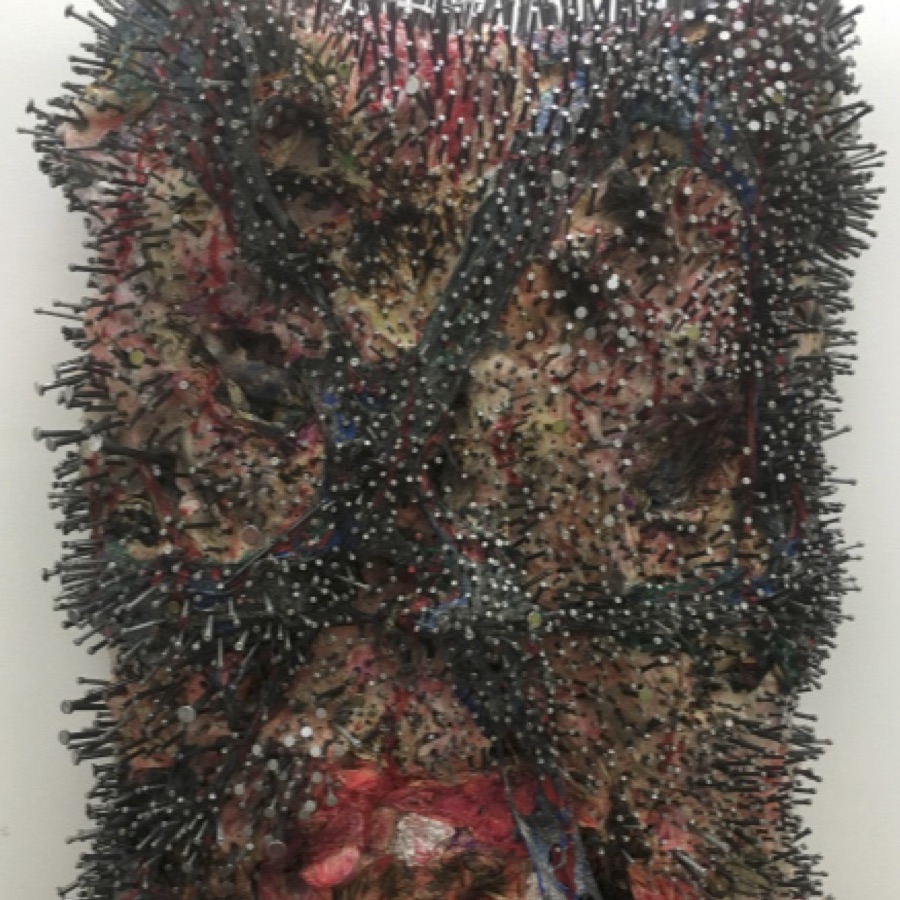
The Mode rn
Feb 2-28, 2019
Opening Reception Feb 2, 7-9PM
Yasmeen Abdallah, Hannah Beerman, Alex Dolores Salerno, Sam Bennett, Julia Justo, Will Kaplan, Ben Lenovitz, Holly McGraw, Ana Ratner, Jordan Segal and Madeleine Welsch.
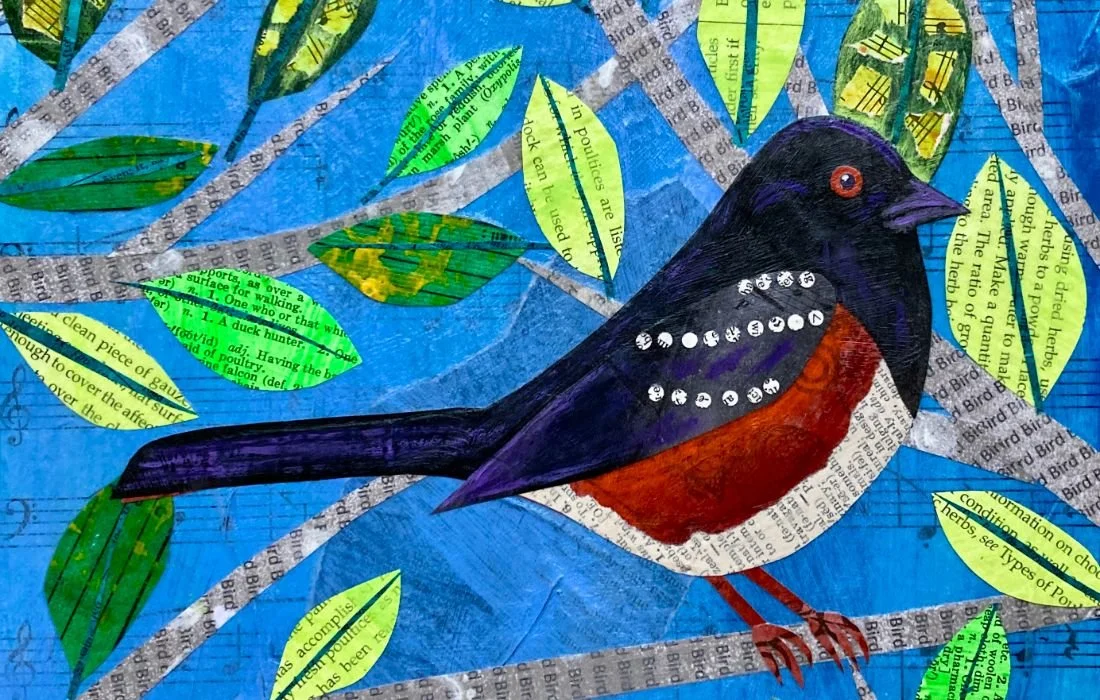
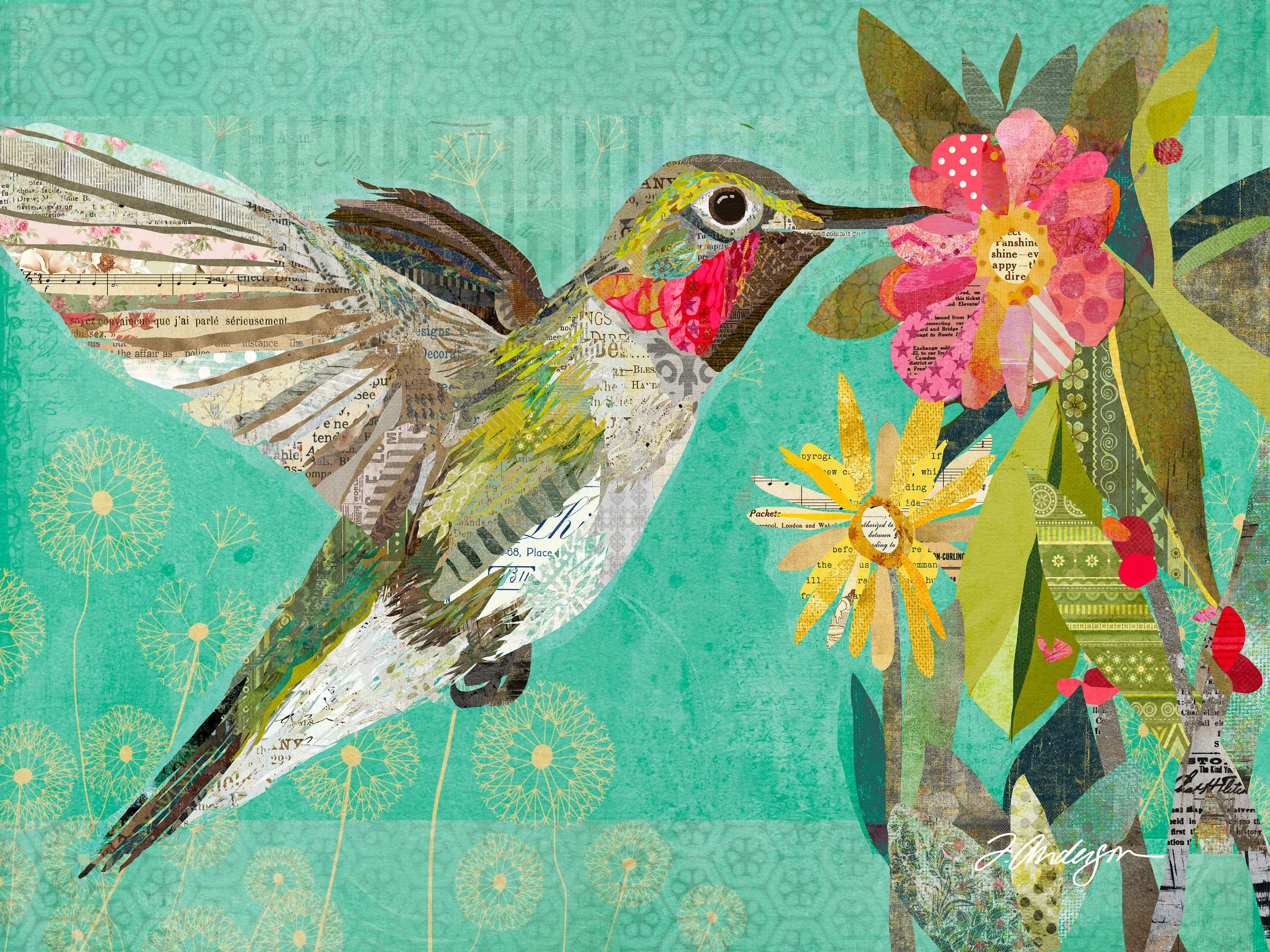
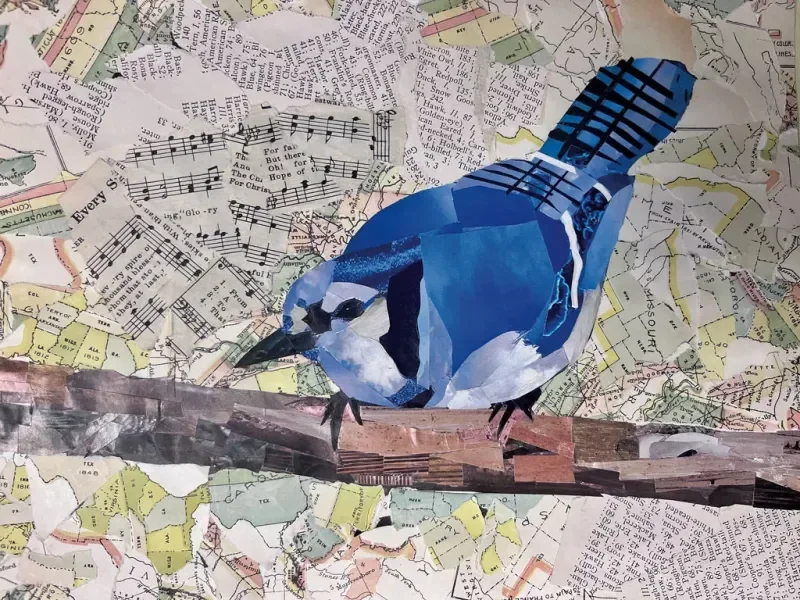
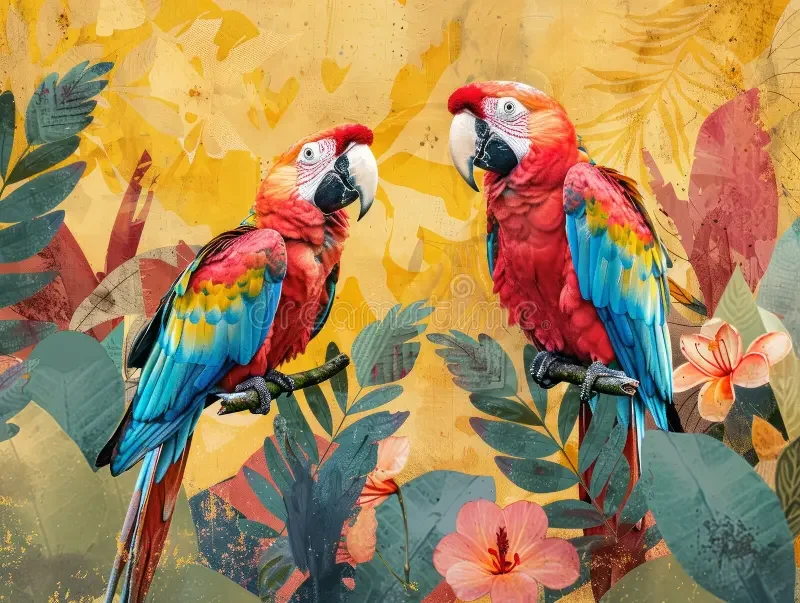
Ask students to think about symbols, objects, animals, or shapes that represent migration, movement, or identity. Let’s create a mixed media work.
reflect on ideas such as: Travel or journeys, Cultural traditions, Natural symbols of movement (birds, waves, wind, pathways).
Students begin by sketching their ideas on white paper using pencil.
Students will then cut shapes from colored paper based on their design.
Finally, students will arrange and glue the paper shapes onto the paper.
hat colors represent your feelings about the issue? What shapes or patterns might represent the problem or the solution? What types of lines could express energy, tension, or hope?
Students begin by sketching their idea lightly in pencil.
Create their artwork using ink, printing stamps, markers, and colored pencils.
Encourage students to experiment with layering materials, combining drawing with stamping and color to create a dynamic composition.
Reflection: Students display their drawings for a short gallery walk and discuss their work with classmates. What symbols or images did you include to represent migration or identity? How do your shapes, colors, and patterns communicate movement?. How does your piece contribute to the larger community mural?
Printmaking: Printmaking technique where designs are carved into lino sheets using tools. They applied ink to the raised surface, then pressed it onto paper to create these prints.
Printmaking is the artistic process of creating artworks by transferring images from a prepared matrix—such as a metal plate, woodblock, or screen—onto another surface, usually paper
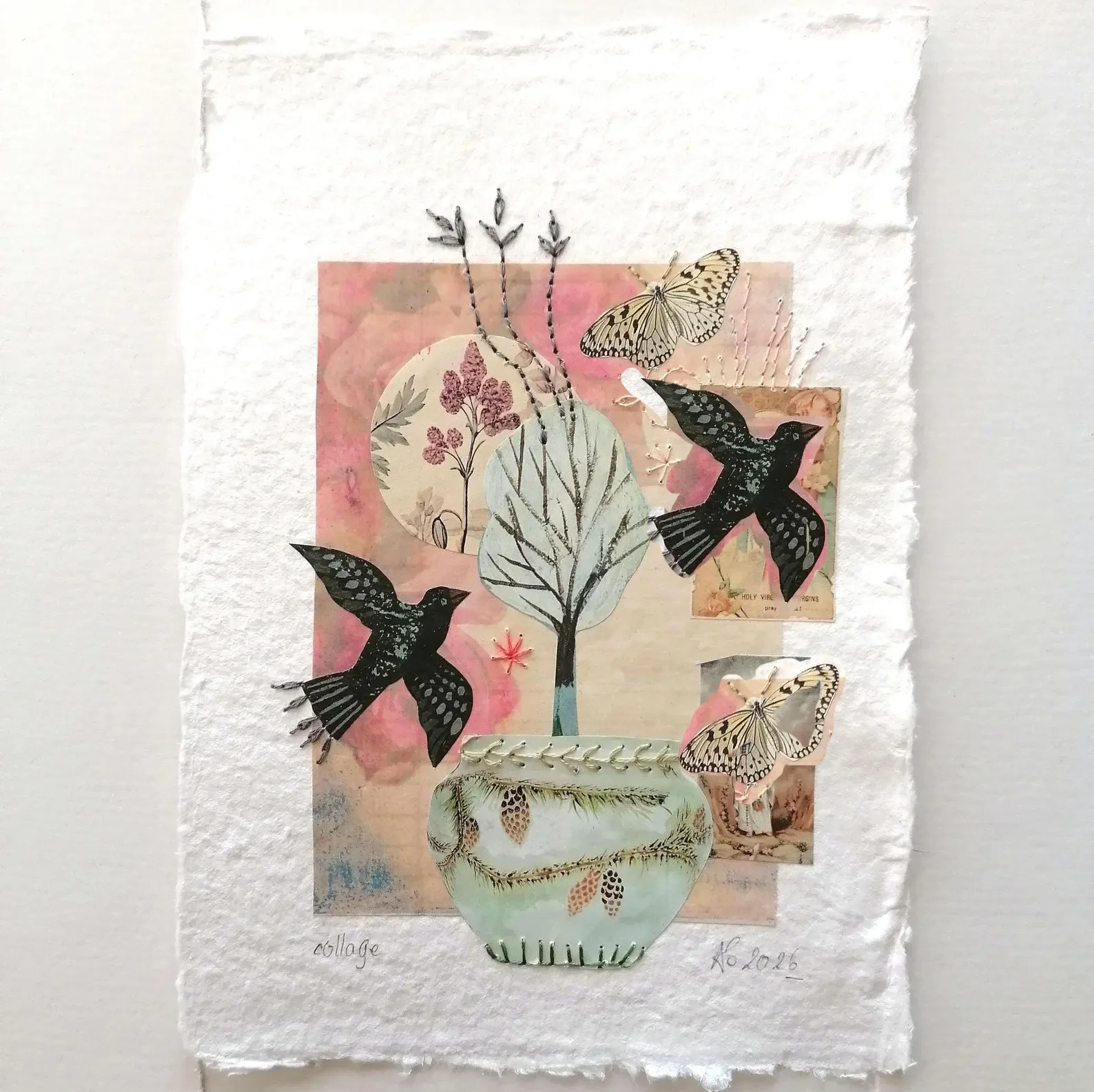
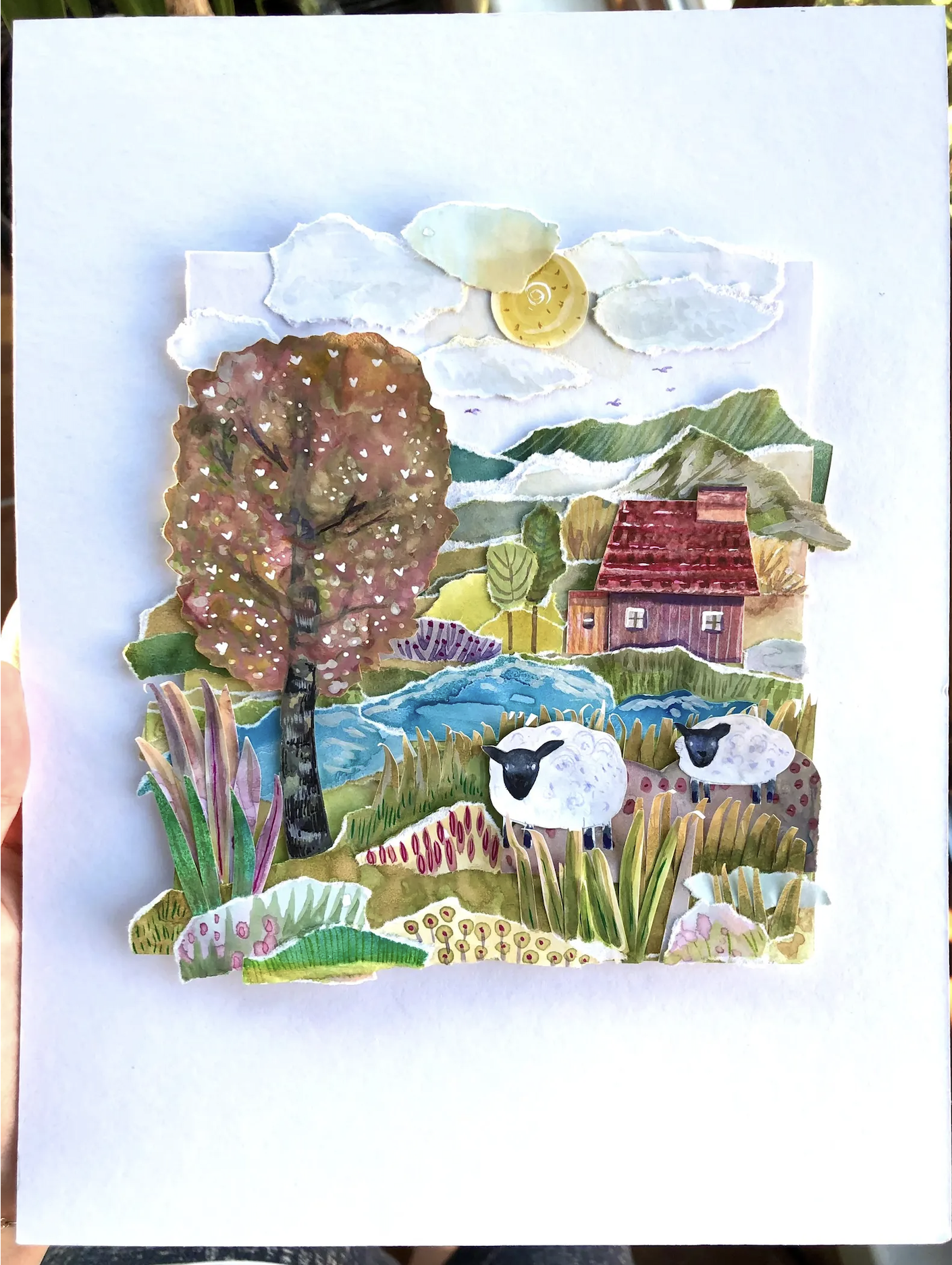
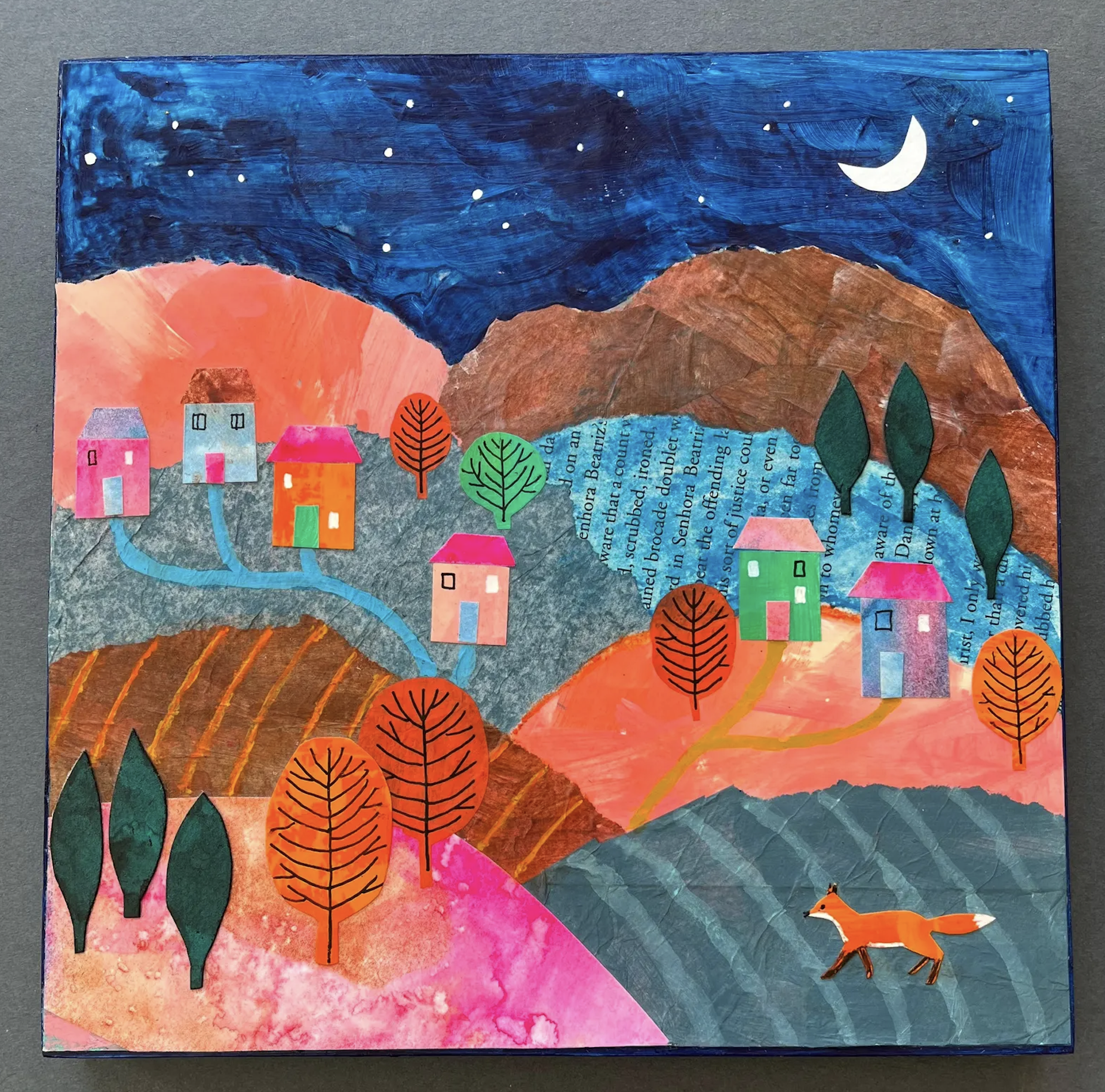
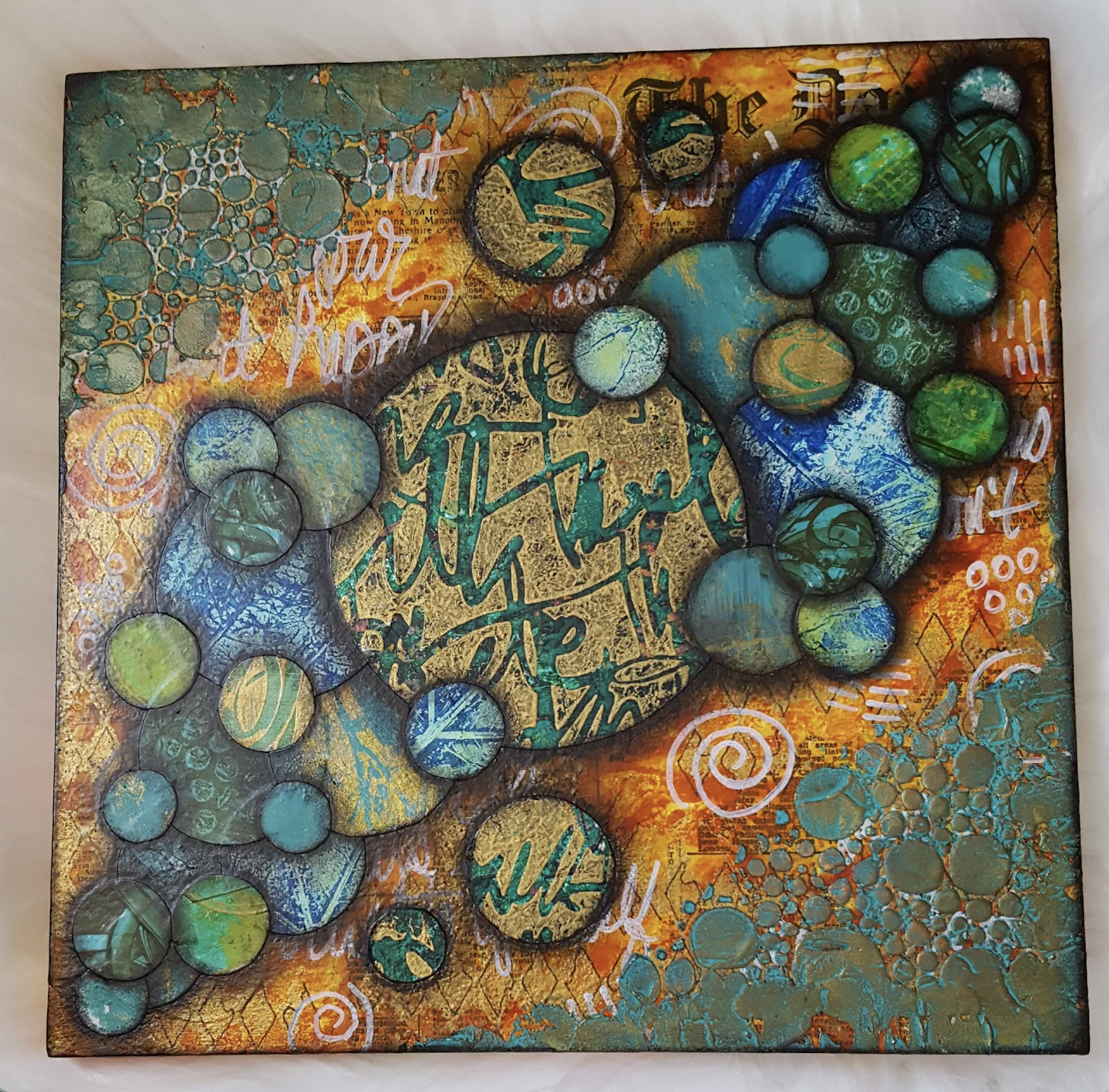
Session 8 Title: Textile Mural
Date: 5/28/26
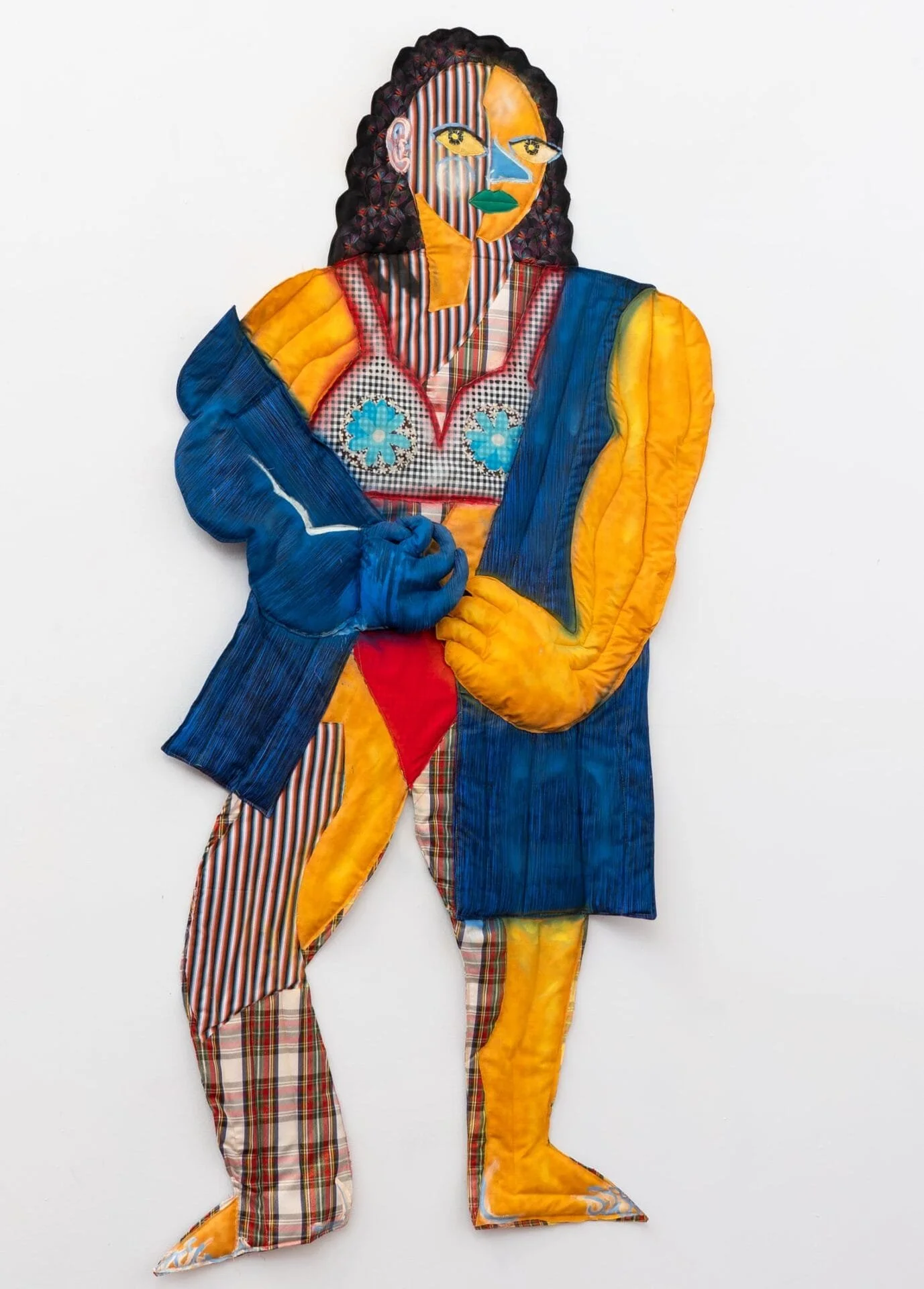
Theme to be explored: Fabric collage and collaborative artmaking. Exploring how textiles, patterns, and symbols can represent identity, migration, and movement.
Understanding how art can bring communities together and tell shared stories.
Learning Objective: In this lesson students will learn about the work of Latin American artist Maria A. Guzman Capron. Students will explore themes of identity and immigration through collaborative artmaking.
Students will design elements that will contribute to a collective textile mural representing migration and community.
Activity Breakdown:
Materials: pencils, white paper, parchment paper.
Procedure:
How can art bring a community together?
How can art tell stories about identity, migration and movement?
Explain that the class will work collectively to create a textile mural representing identity and migration.
Invite students to observe the artwork carefully and share their thoughts and observations.
How do continuous lines, shapes, and patterns create a sense of movement?
What type of composition do you notice? Is it vertical, horizontal, radial, or symmetrical?
What colors and patterns stand out to you?
Ask students to share their observations. create a list of visual details
Ask students to observe the work and invite them to share their opinions and observations.
Ask students how the use of continuous lines, shapes and pattern convey ideas of movement.
Ask students to talk about the composition. Is it vertical, horizontal, radial, symmetrical?
Ask students to talk about the colors and patterns they notice. Make a list of details.
Ask students to think about symbols, objects, animals, or shapes that represent migration, movement, or identity.
reflect on ideas such as: Travel or journeys, Cultural traditions, Natural symbols of movement (birds, waves, wind, pathways).
Students begin by sketching their ideas on white paper using pencil.
Once the design is complete, students will trace their sketch onto parchment paper.
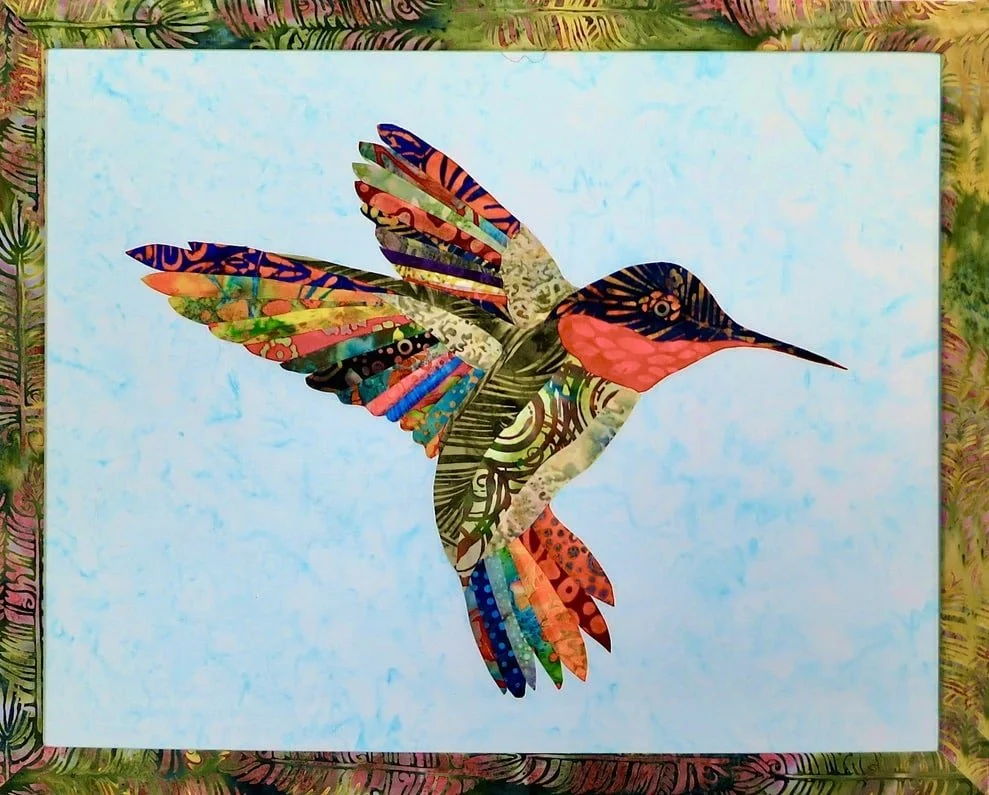
Students will then cut shapes from colored fabric based on their design.
Finally, students will arrange and glue the fabric shapes onto the paper to create their textile collage piece that will contribute to the class mural.
Reflection: Students display their drawings for a short gallery walk and discuss their work with classmates. What symbols or images did you include to represent migration or identity? How do your shapes, colors, and patterns communicate movement?. How does your piece contribute to the larger community mural?
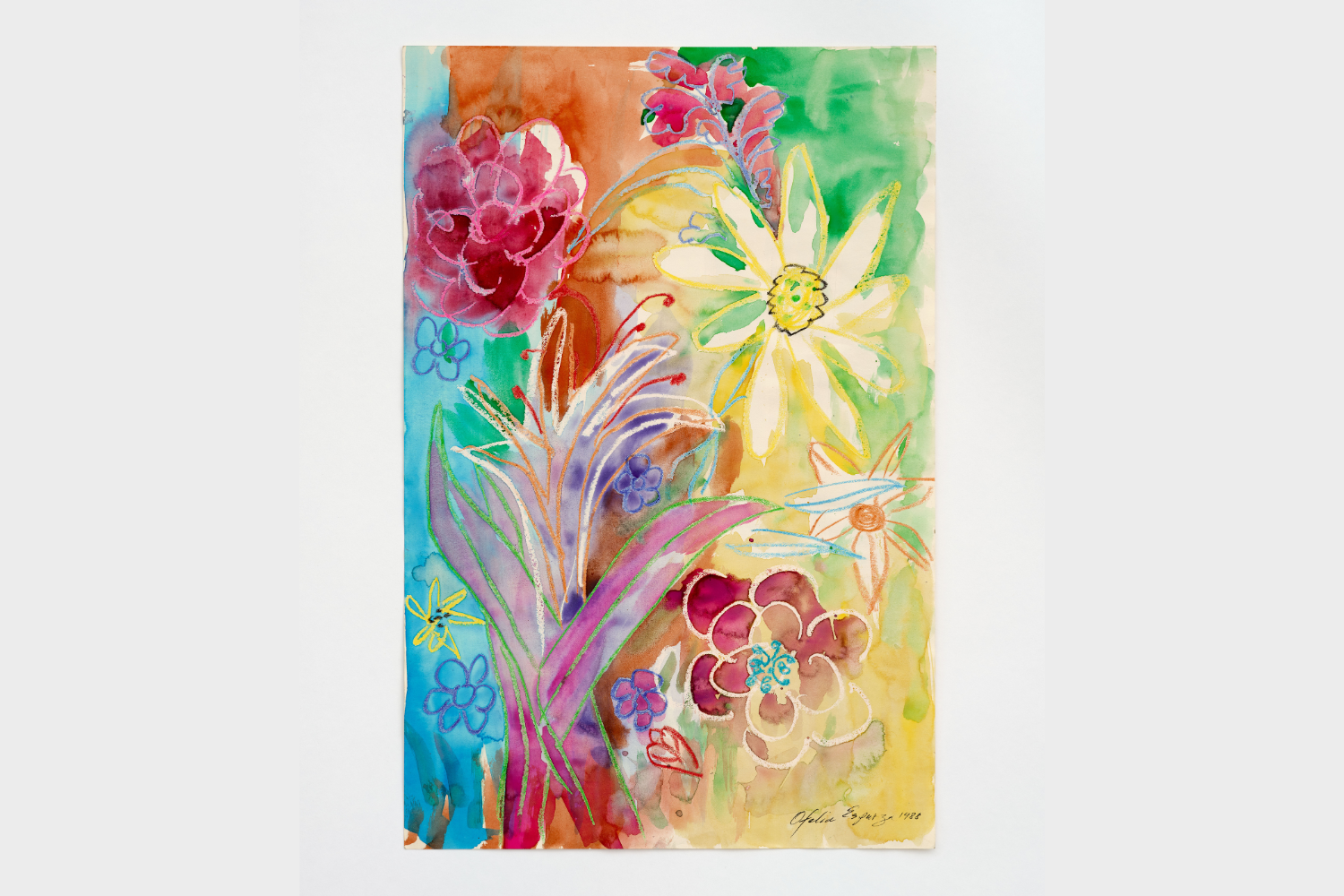
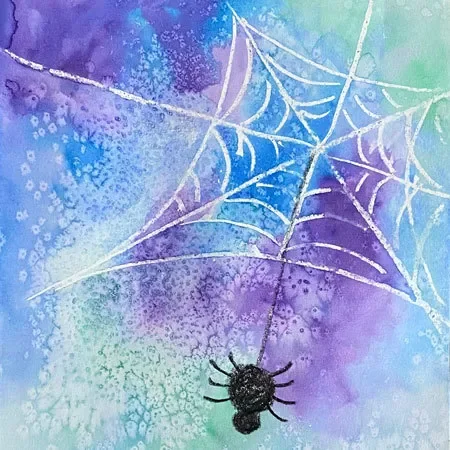
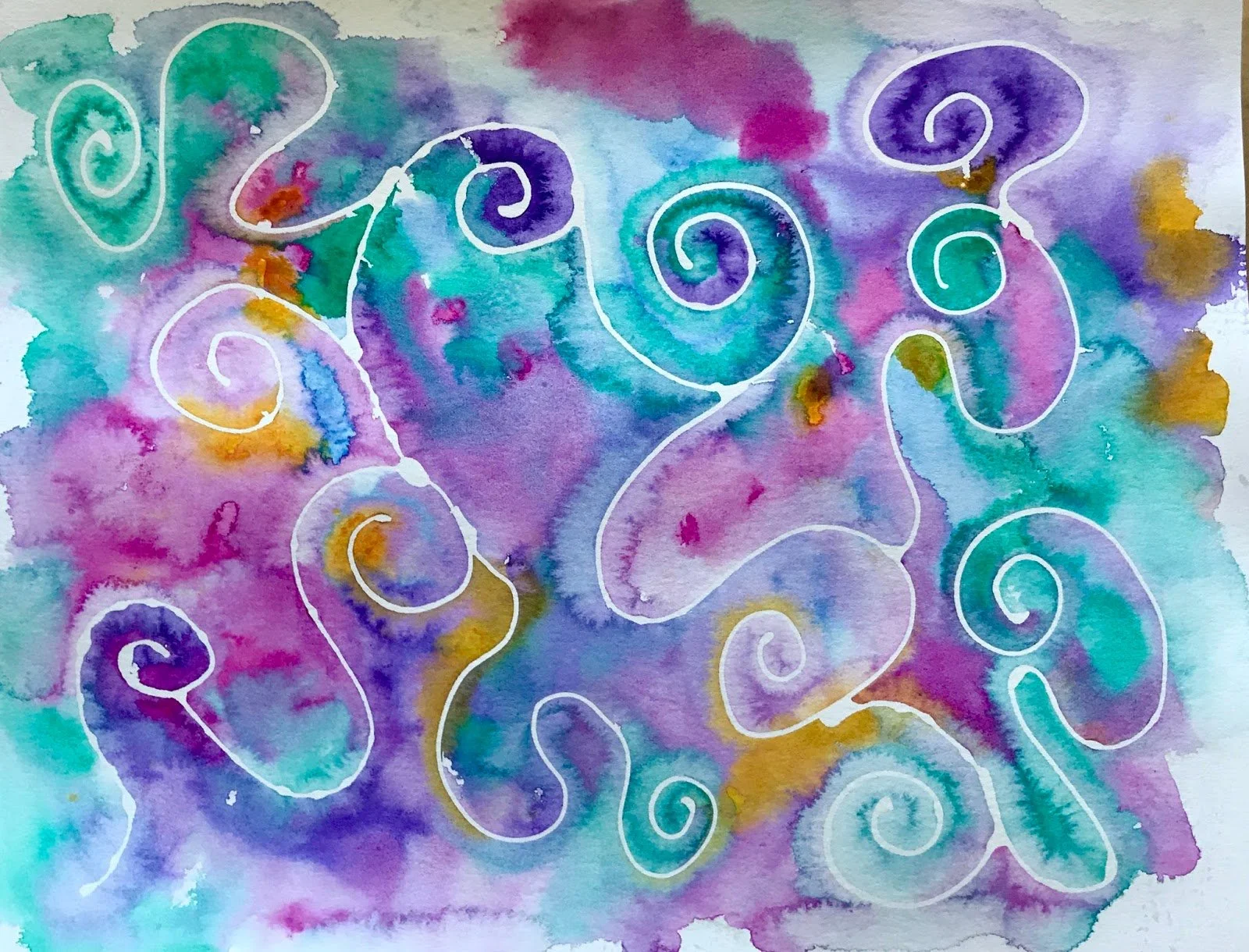
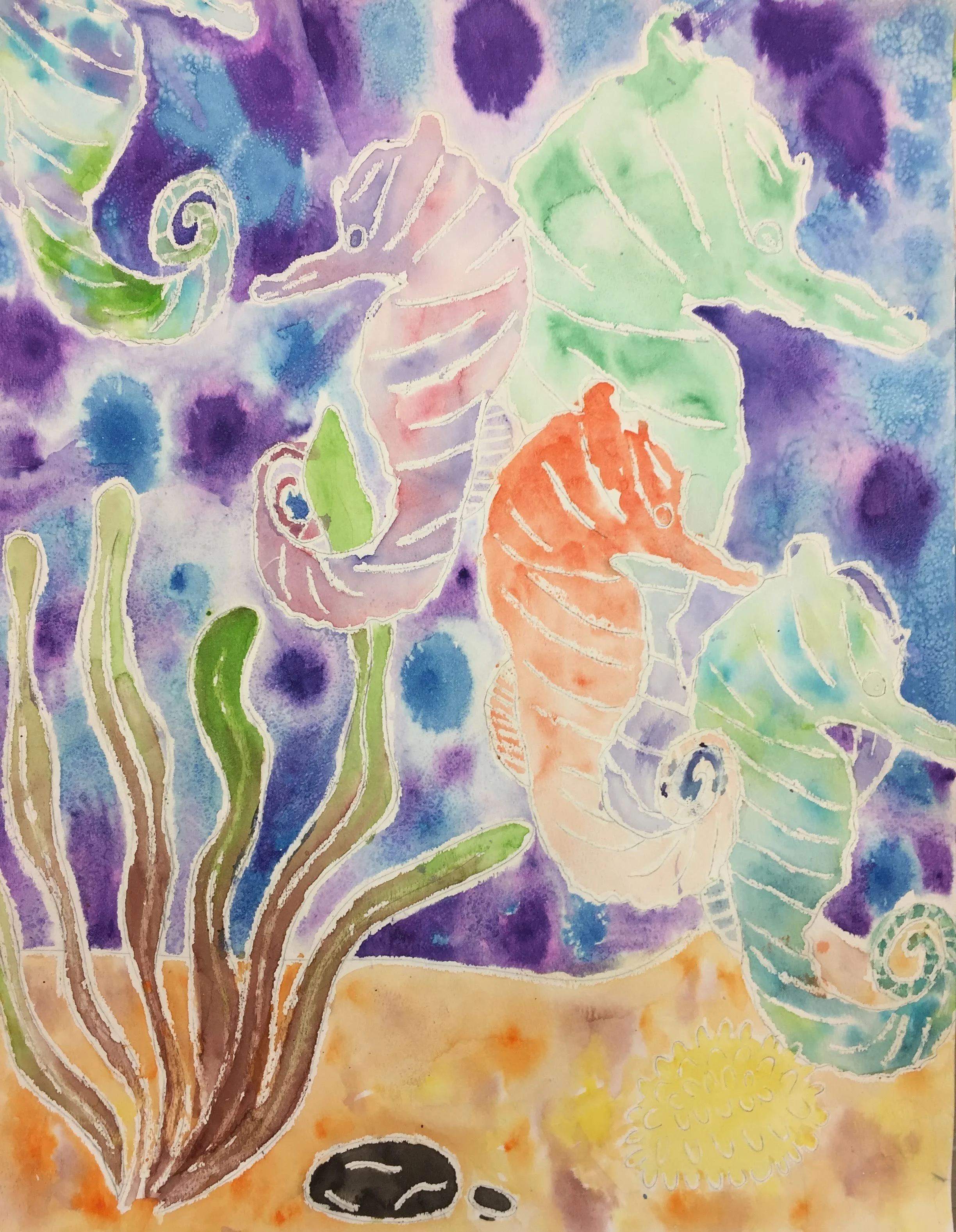
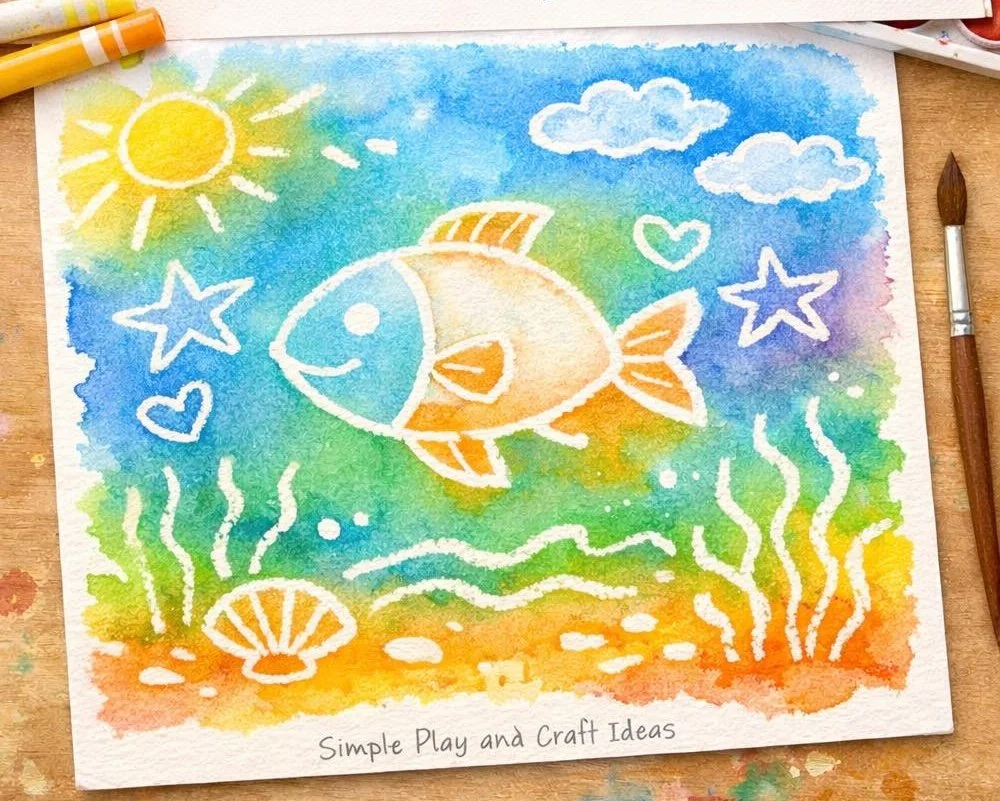
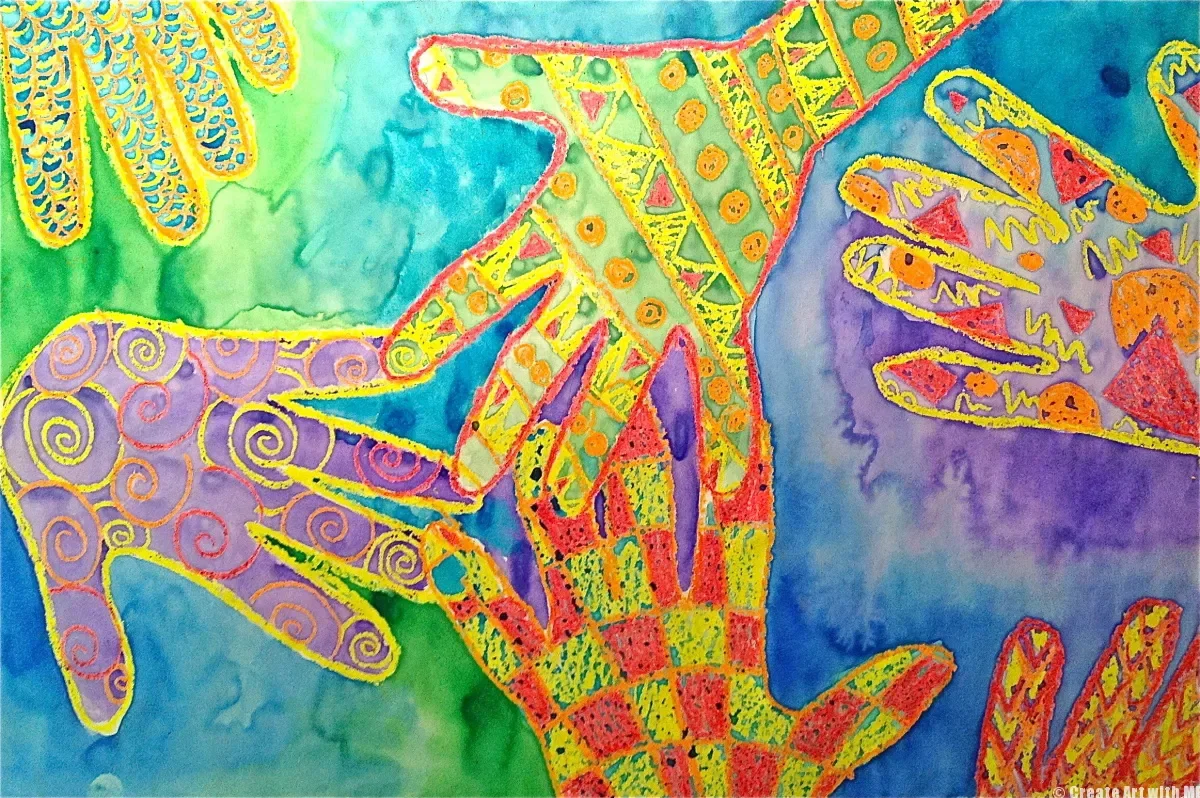
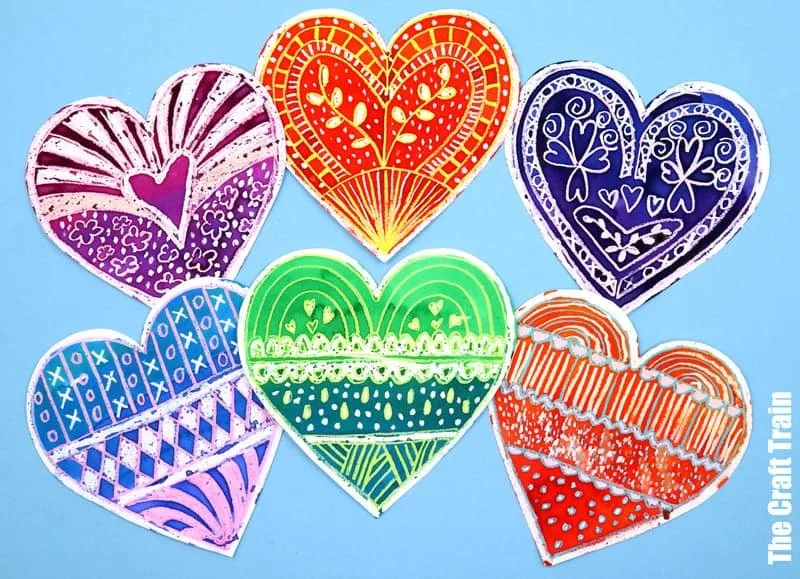
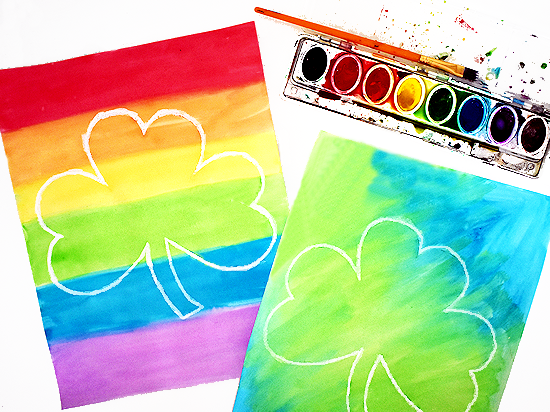
Watercolor resist painting using crayons.
Crayons are waxy and they resist watercolors, preventing the paper from absorving the paint.
Learn how to make a watercolor resist painting. The crayon repels the watercolor paint, and looks especially cool when you use light or white crayons with bold or dark watercolors!
SUPPLIES
Crayons
Paper
Watercolor paints
Paintbrush
Salt
STEPS
Draw an image with crayons. Press the crayon hard onto the paper. Make sure you press hard to get as much of the waxy crayon on your paper as posible. Test it out with different shapes, colors.
Paint over the drawing with watercolor. The crayon wax resists the watercolor. When you paint on top of it so you canstill see the crayon.Crayon still sticks out, pops out at you. So you can still paint on top of what you already paint it, as long as you don’t paint too thick you can still see the crayon underneath the paint.
While the paint is still wet, sprinkle salt onto the painting.
Let dry.
Rub the salt off the painting. The salt absorbs the watercolor and leaves a unique bubbly look.
Session 9 Title: Textile Weaving Installation- Introduction to Weaving
Date: 5/19/26
Theme to be explored: Community and weaving together many identities. Understanding weaving as a metaphor for how people connect in communities.
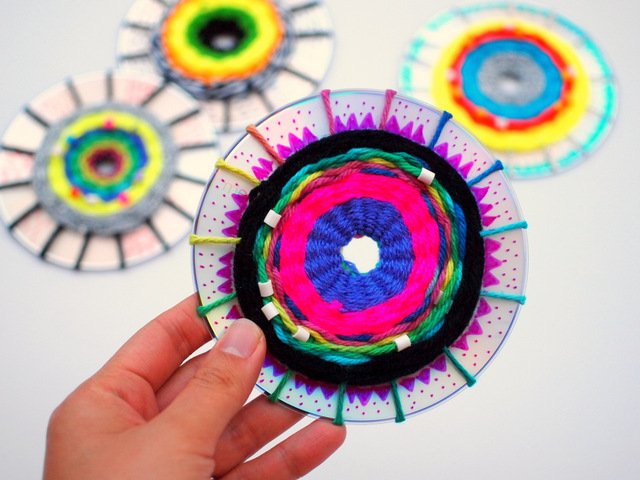
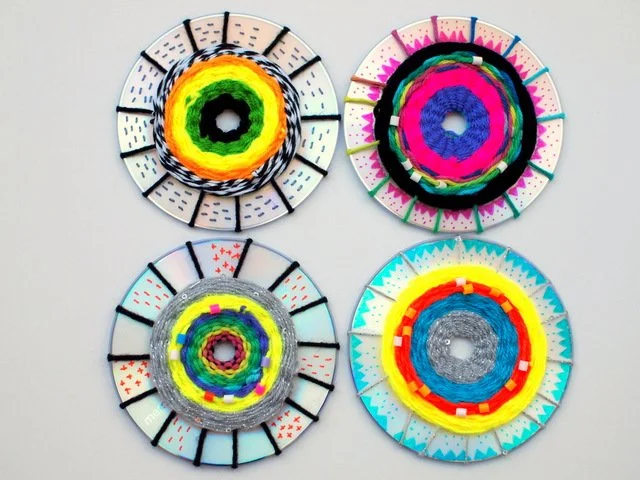
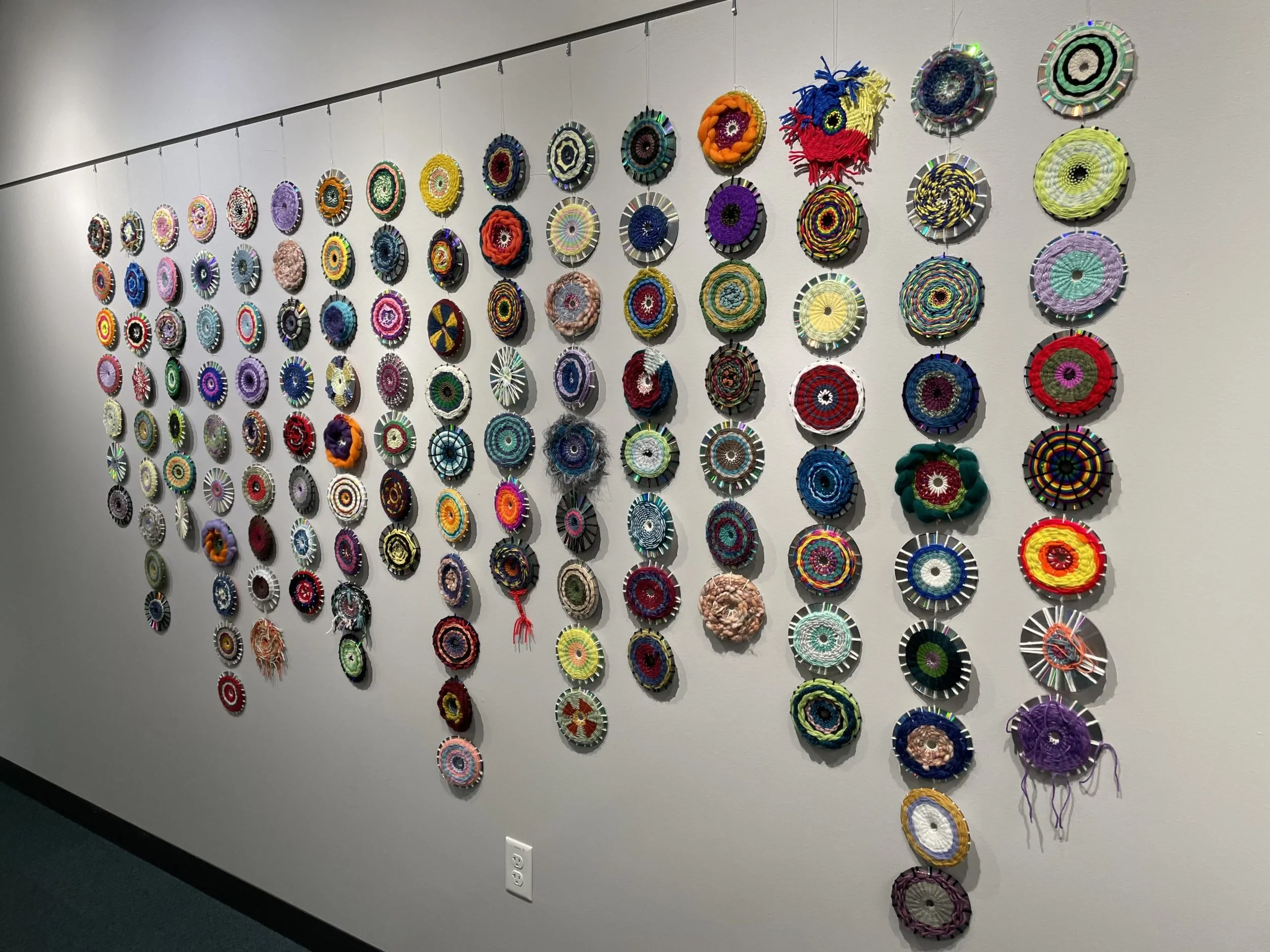
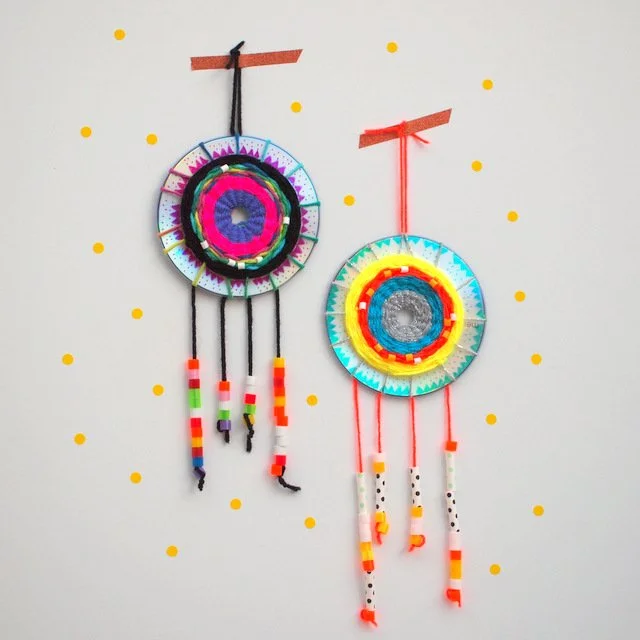
Learning Objective: In this lesson students will learn about the work of an artist Lidia Lisboa. Students will create a woven textile artwork using CDs as a loom. Students will explore how weaving connects many threads together, just as communities connect people from different backgrounds.
Activity Breakdown:
Materials: Cds, yarn (various colors), scissors, plastic needles, beads, paint markers.
Procedure:
Begin with a conversation about community.
Ask students: What does the word community mean?, Who is part of your community?
Explain that communities are made of many different people who are connected like threads in a weaving.
Introduce the work of Lidia Lisboa, who often works with fibers and materials to explore identity and connection.
Show students how weaving works. Demonstrate how to prepare the CD loom: Students begin weaving their CD.
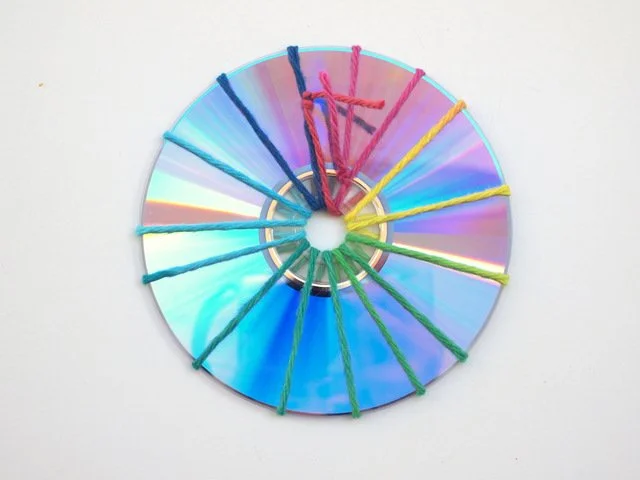
First, we're going to put on our warp strings. Cut a piece of yarn (about 6'). Then, tie it to your cd. (I tied the knot to the shiny side because that was my back side.) Then, wrap your yarn an odd number of times around your cd. (I wrapped mine 13 or 15 times.) Make sure to pull the warp strings tight. Then, tie your string in place.
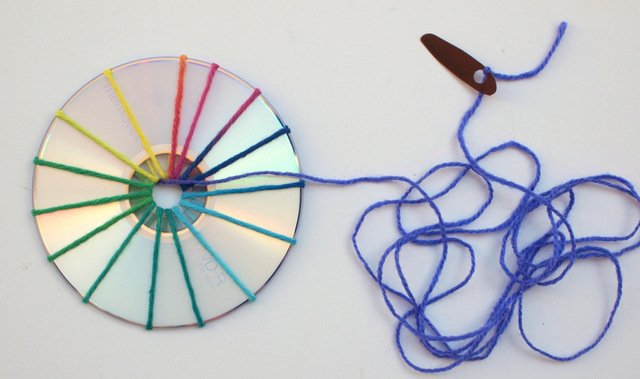
Now you're going to start weaving. Cut out a piece of yarn (I cut my pieces 6'-8'). Tie it to your warp string on the back. Then, pop the string through the hole to the front side (the white side) and tie on your "needle." (Mine was made from a plastic lid.)
Now weave! Simply go over one warp string and then under the other warp string. Keep repeating this process, making sure to pull your string tight as you go.
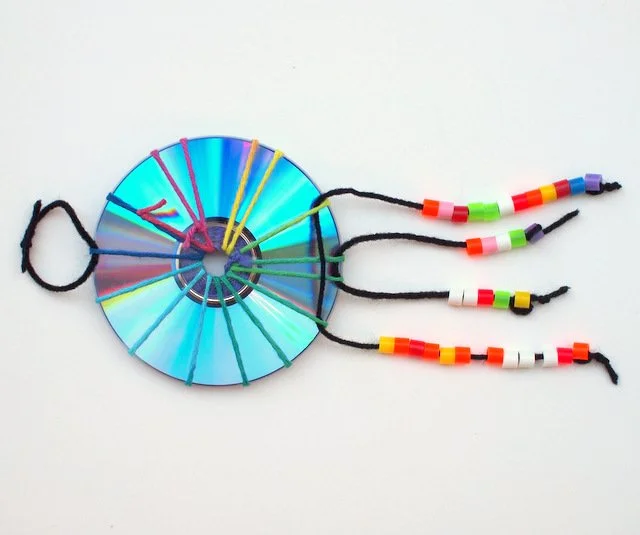
Sometimes I used my plastic lid needle and sometimes I used a piece of masking tape (when I wanted to add beads.) When you switch strings, simply tie the new yarn to the old yarn and then trim the strings, leaving a little bit of ends left. Hide the ends under your weaving and no one will be able to know that it's there. And when you're adding beads, be sure to add one at a time!
Keep on going! When you're finished, tie your string to a warp string and hide excess bits under your woven circle. Then, use a Sharpie to add your final touches!
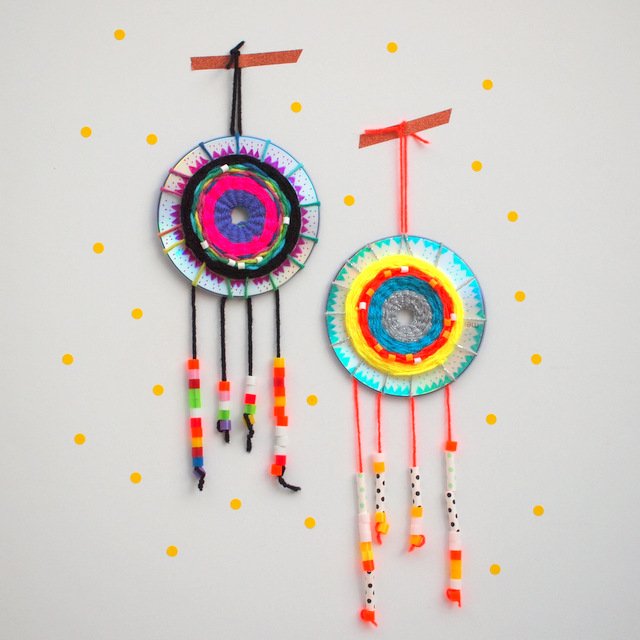
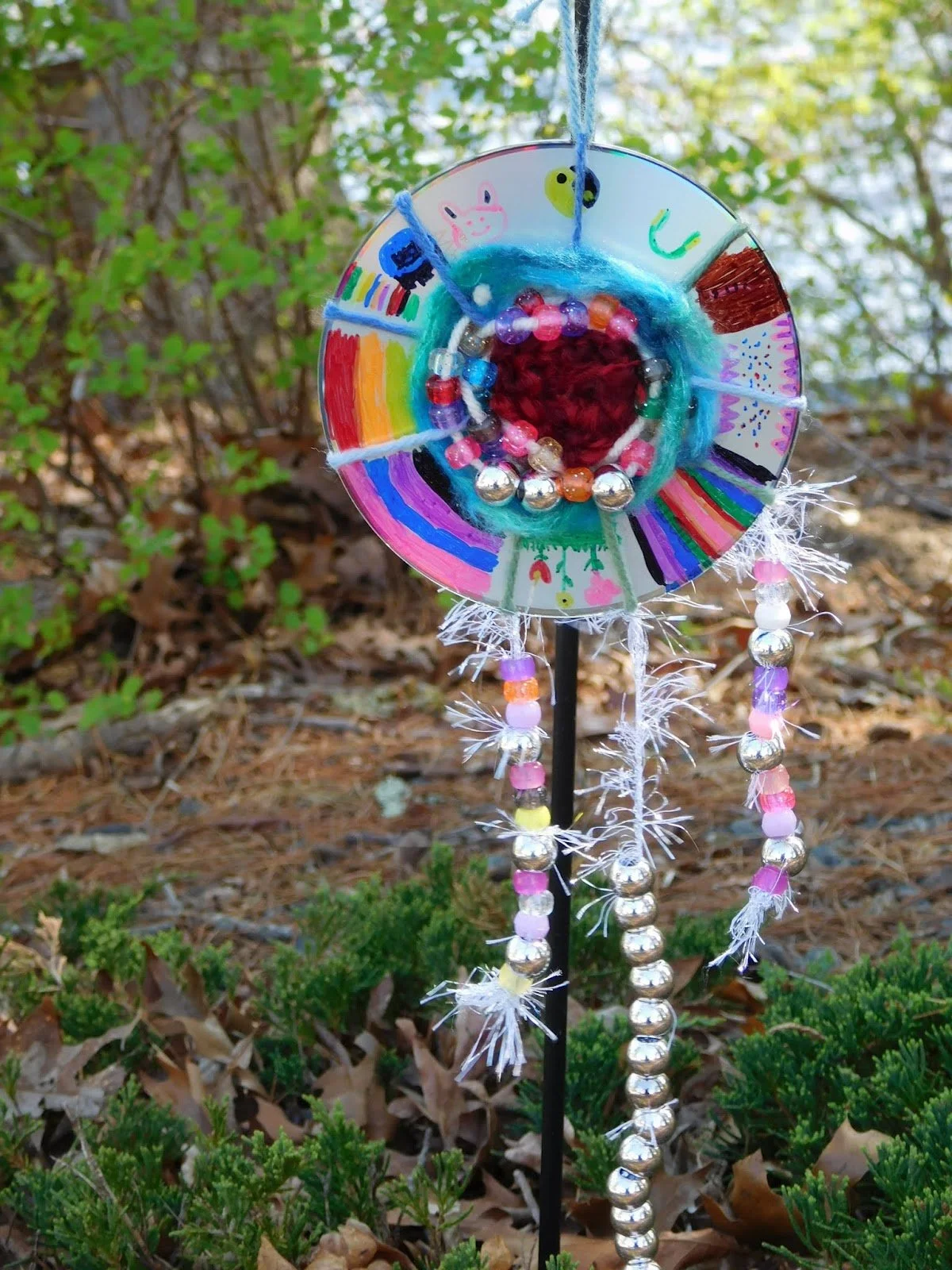
You can keep them as they are, or turn them into dream catchers! To turn them it into dream catchers, tie on strings and beads as shown below.
Encourage students to: Choose colors that represent them. Think about how each thread is like a piece of their identity.
Students may begin adding beads to their weaving.
Reflection
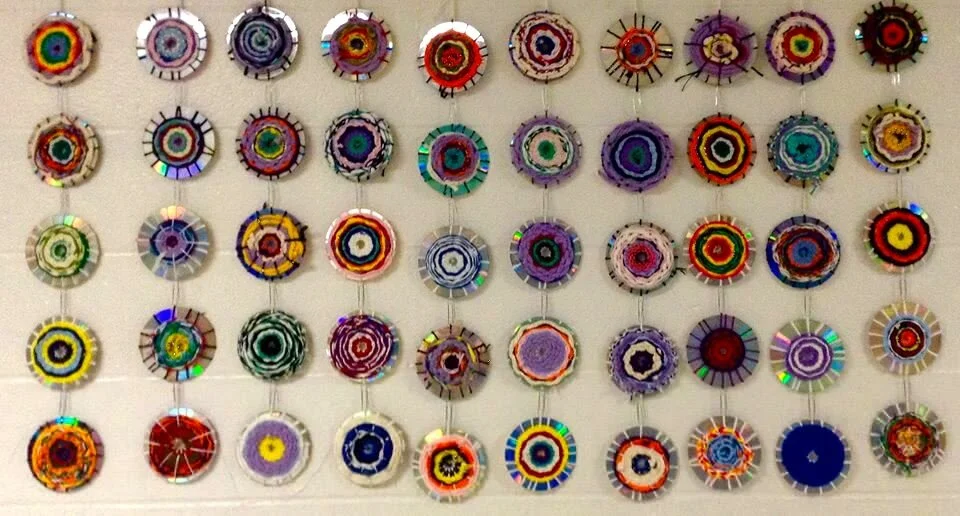
Students display their weaving for a short gallery walk. What yarn colors did you choose? Why did you choose those colors? How did it feel to weave using the CD?
Instructions:
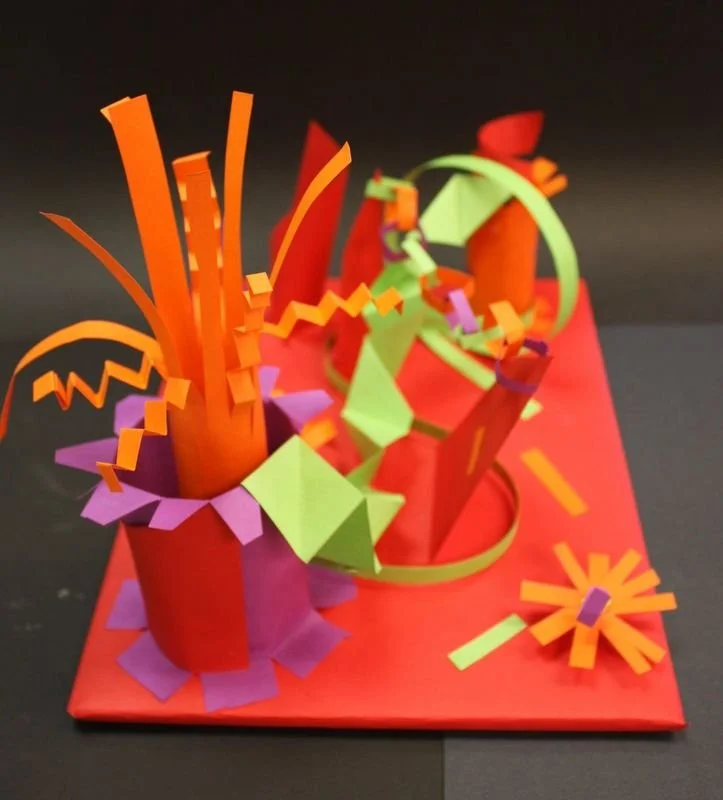
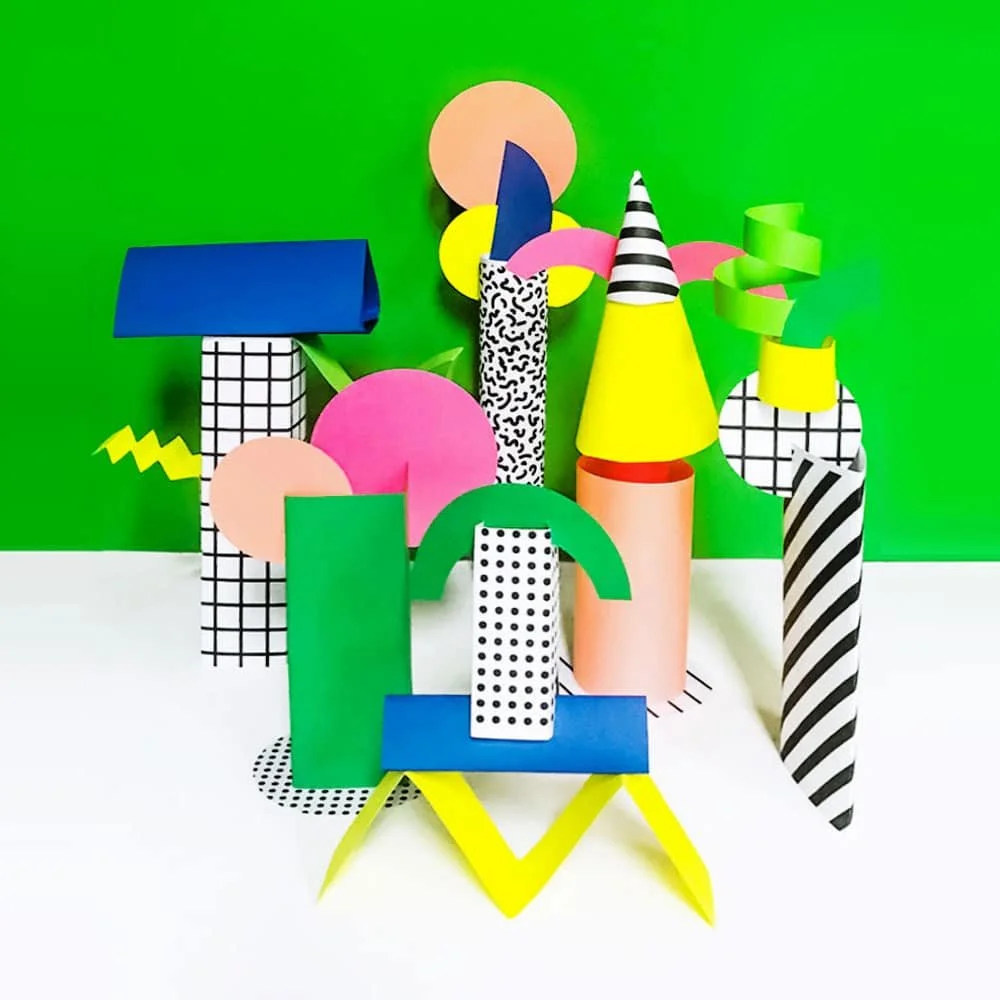
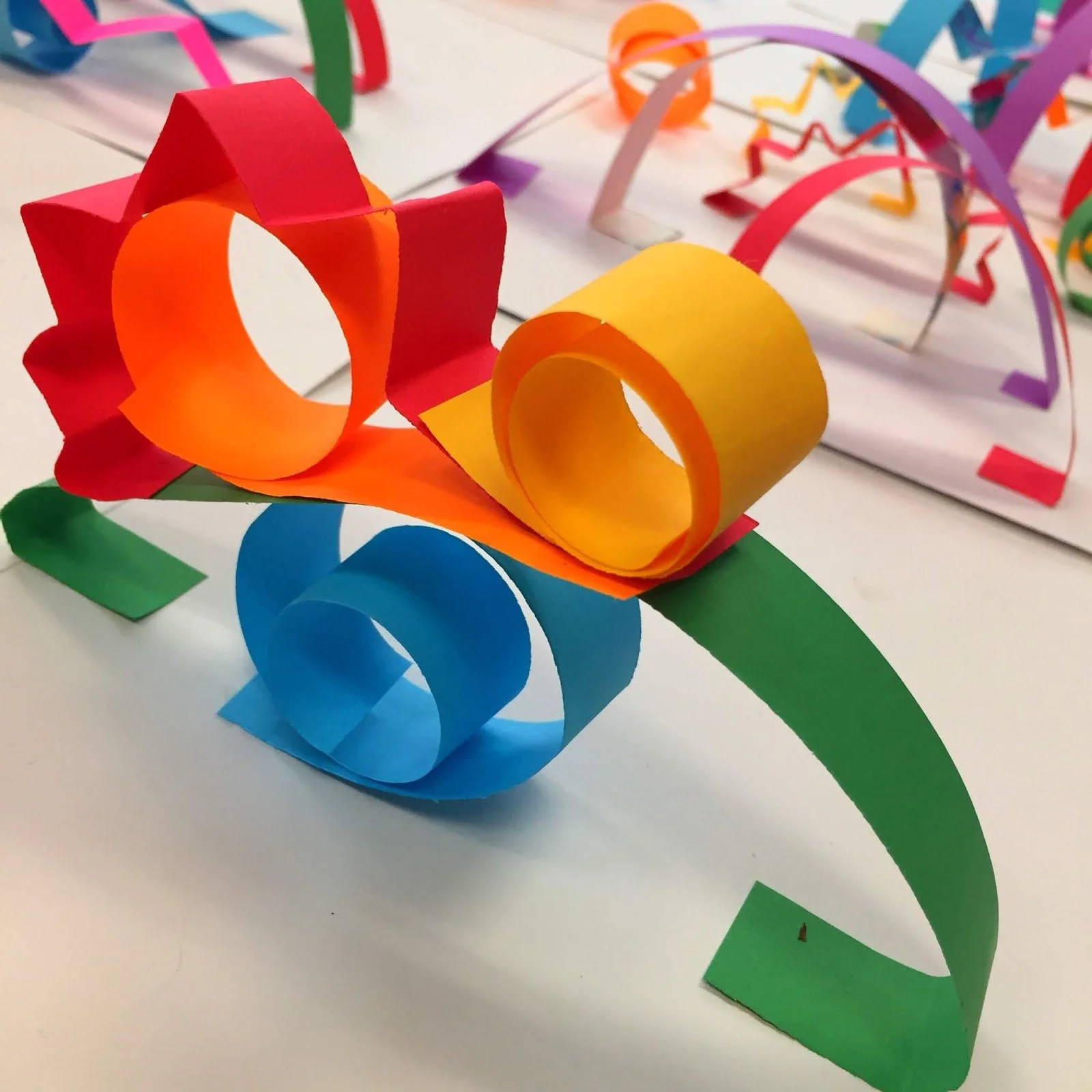
Think about how bridges connect people and places. They span barriers like rivers, valleys, and mountains, to enable the movement of people and goods.
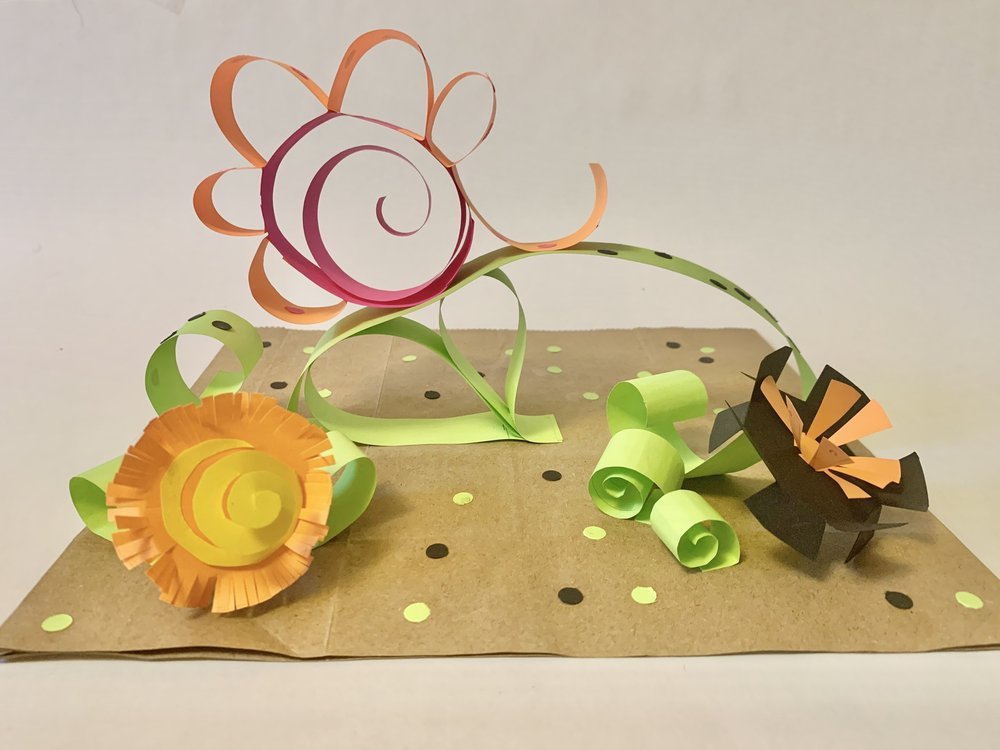
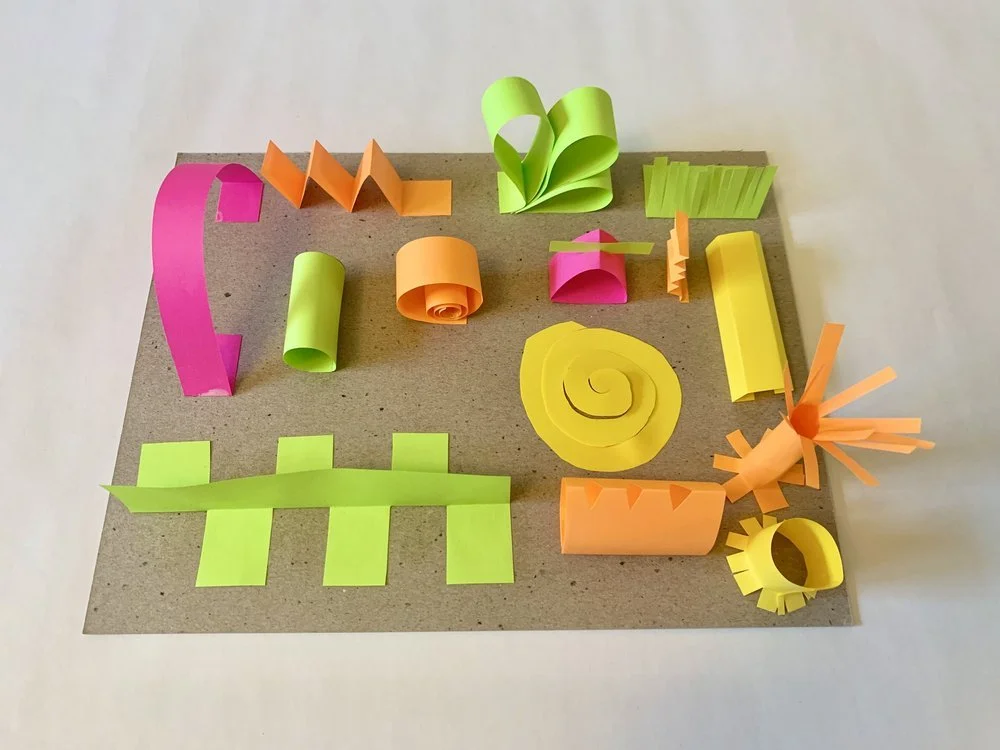
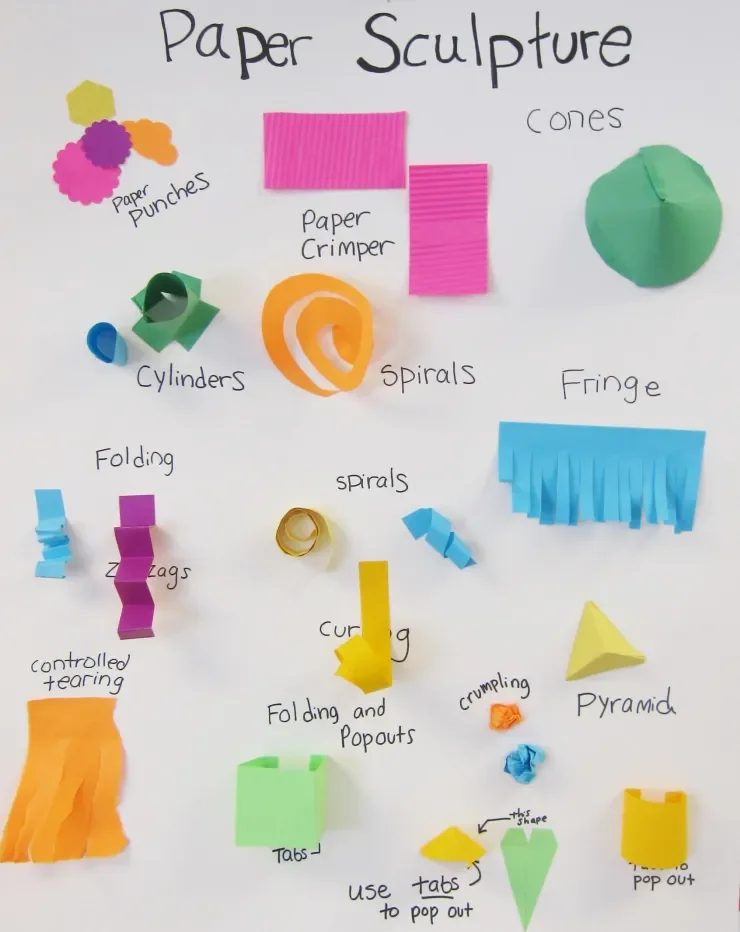
1. Cut strips of paper in different widths and lengths. Try a mix of long, short, thin, and wide strips to make your sculpture more interesting.
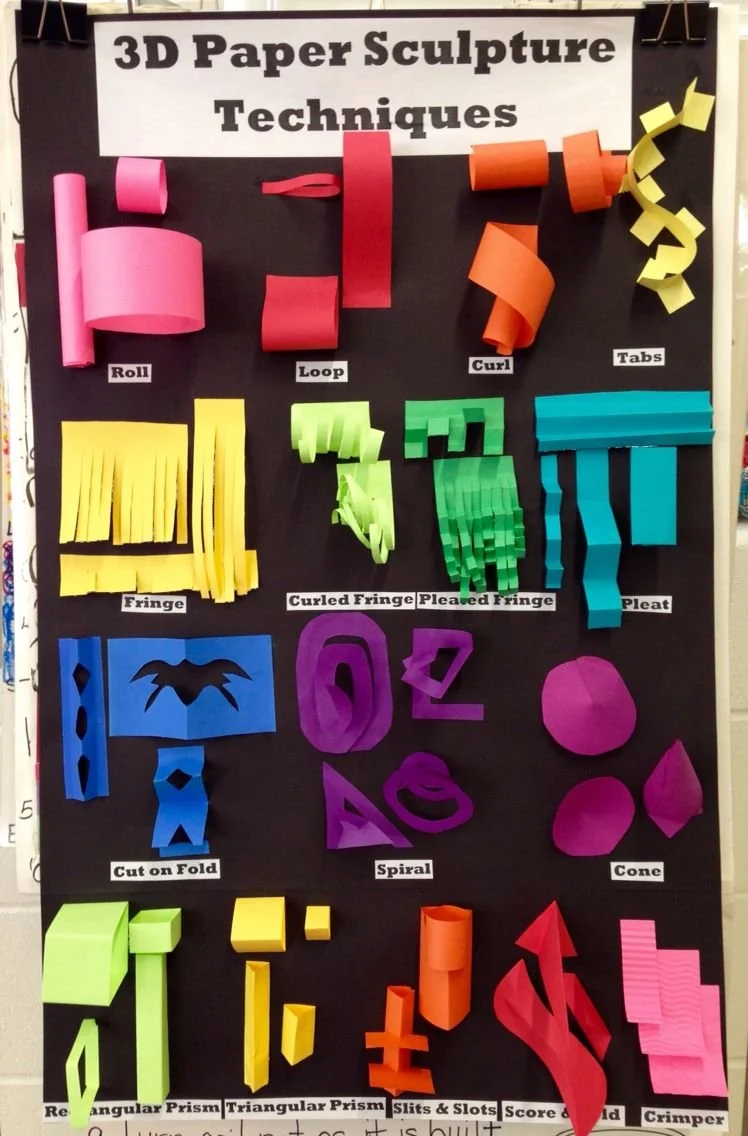
2. Add Texture and shape:
Curls & Spirals: Roll a strip of paper around a pencil, then slide it off to create a curl.
Accordion Folds: Fold a strip back and forth, like a fan, for a zigzag effect.
Fringes: Use your scissors to cut small slits along the edge of the paper.
Hole Punch Patterns: Use a hole punch to create dotted designs in your paper strips.
Paper Tubes: Roll a strip into a cylinder and glue the edge down to hold its shape.
3. Create a “foot” for your paper strips to help your paper pieces stand up, fold a small tab (or "foot") at each end of your strips. Add glue to the tab and press it down onto your background paper. This will help your pieces stay in place.
4. 4. Arrange & Attach Your Pieces. Overlap pieces to make layers.
Weave strips in and out of each other.
Mix different textures together for a unique look.
Experiment with height by curling, folding, or stacking strips.
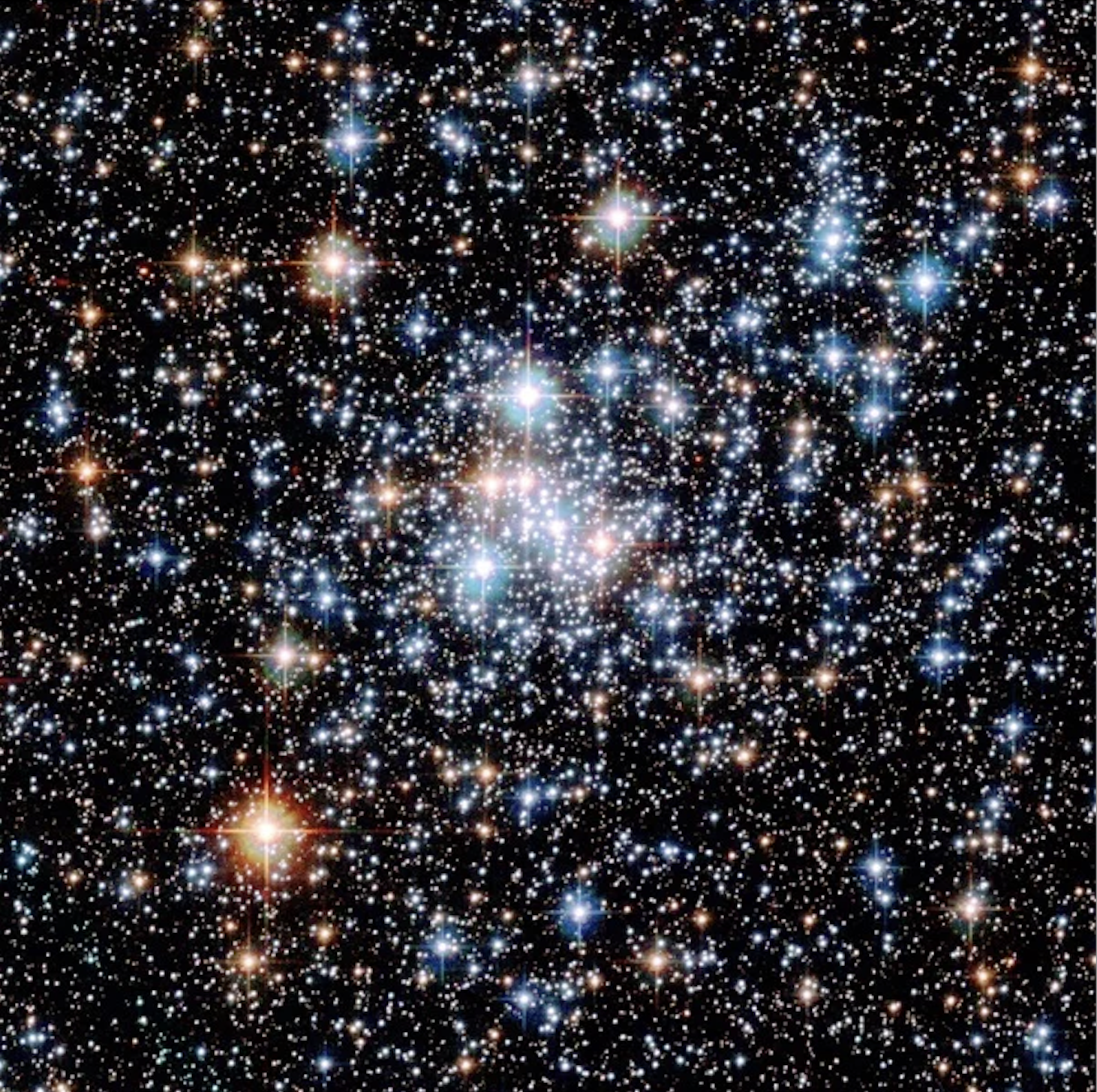
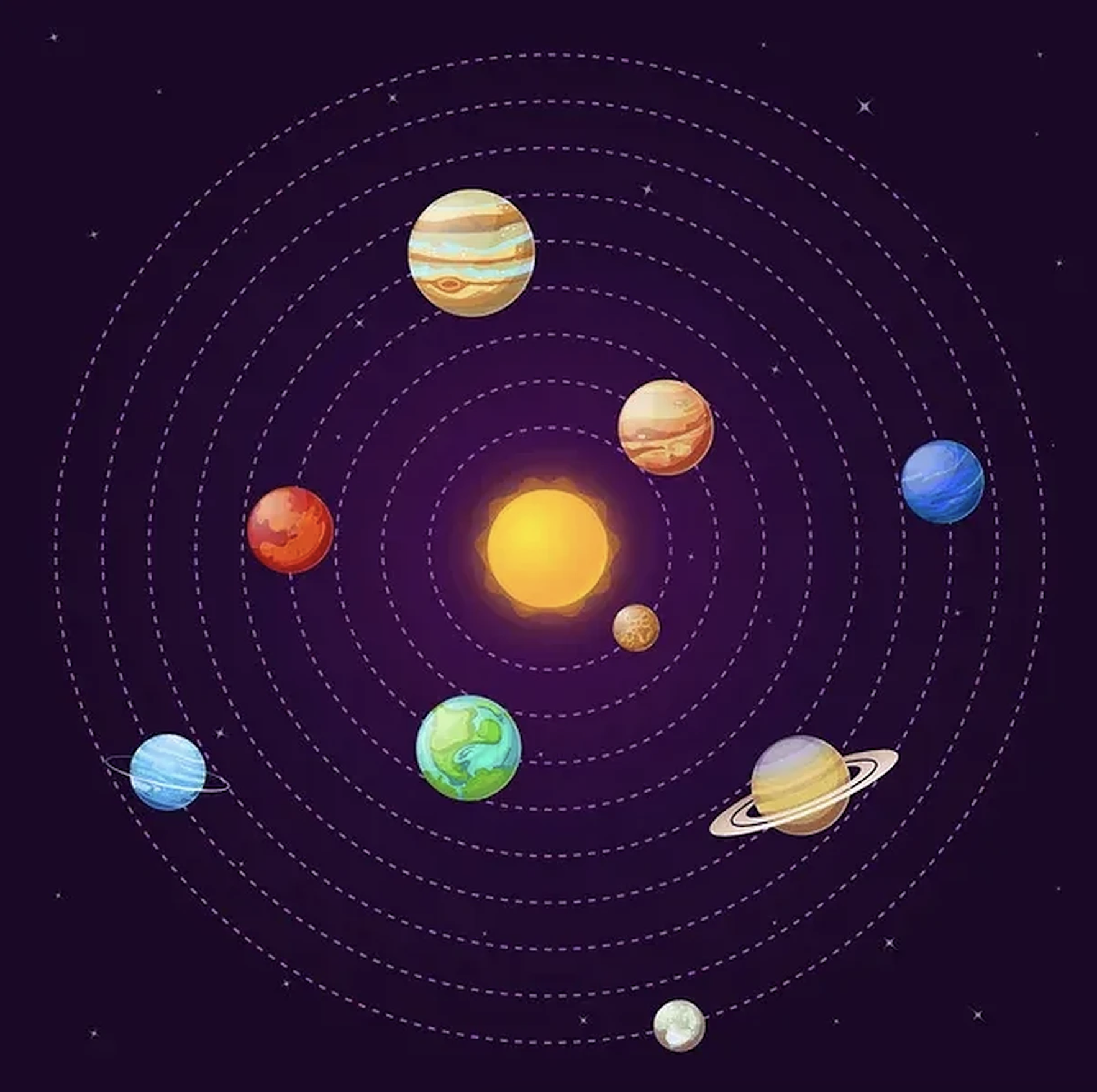
Use relatable analogies like comparing the size of space to a giant playground.
Explain that space is huge and there are many planets and stars, and that it's possible that life could exist on some of these other planets, which would be called aliens.
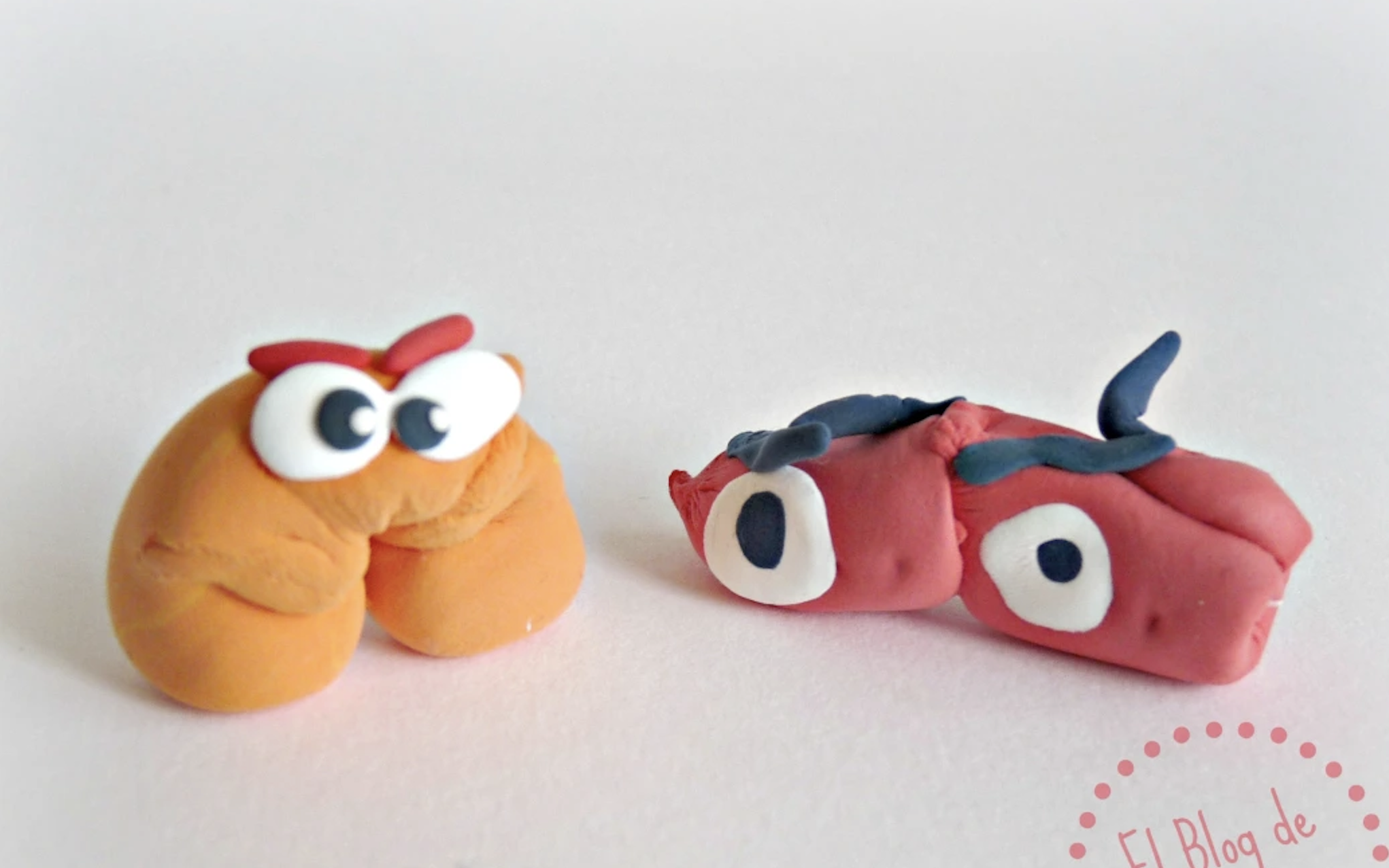
Explain that aliens are creatures from other planets, and that we don't know for sure if they exist or what they might look like.
You can mention that scientists think there might be other planets out there that are similar to Earth, and that life could exist on those planets.
Acknowledge that we don't have any proof of aliens yet, but that scientists are still looking for them.
Inspire children to think about the possibility of life beyond Earth and to wonder about what aliens might be like.
Be prepared to answer questions about how aliens might travel, communicate, or what they might look like.
Emphasize that scientists are actively researching space and searching for signs of life on other planets.
While it's fun to imagine aliens, it's important to keep the conversation grounded in science and avoid misleading claims.
Encourage children to use their imaginations and think about what aliens might be like, but also explain that these are just possibilities.
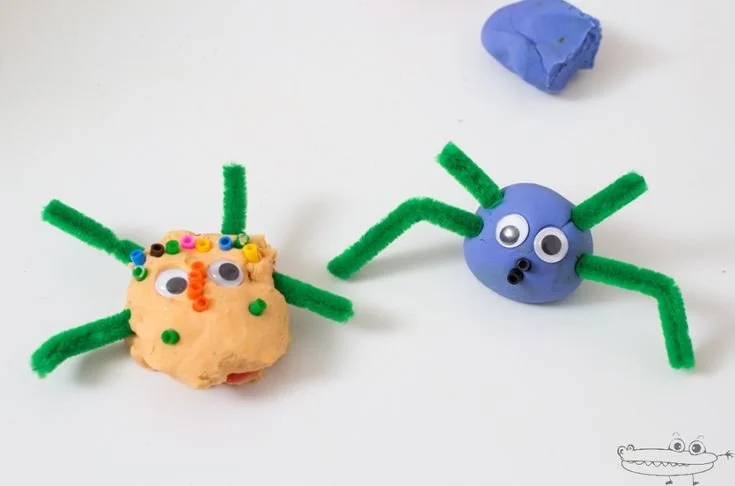
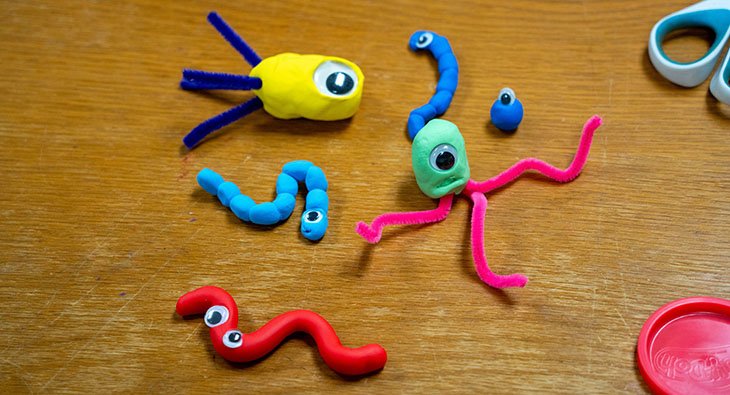
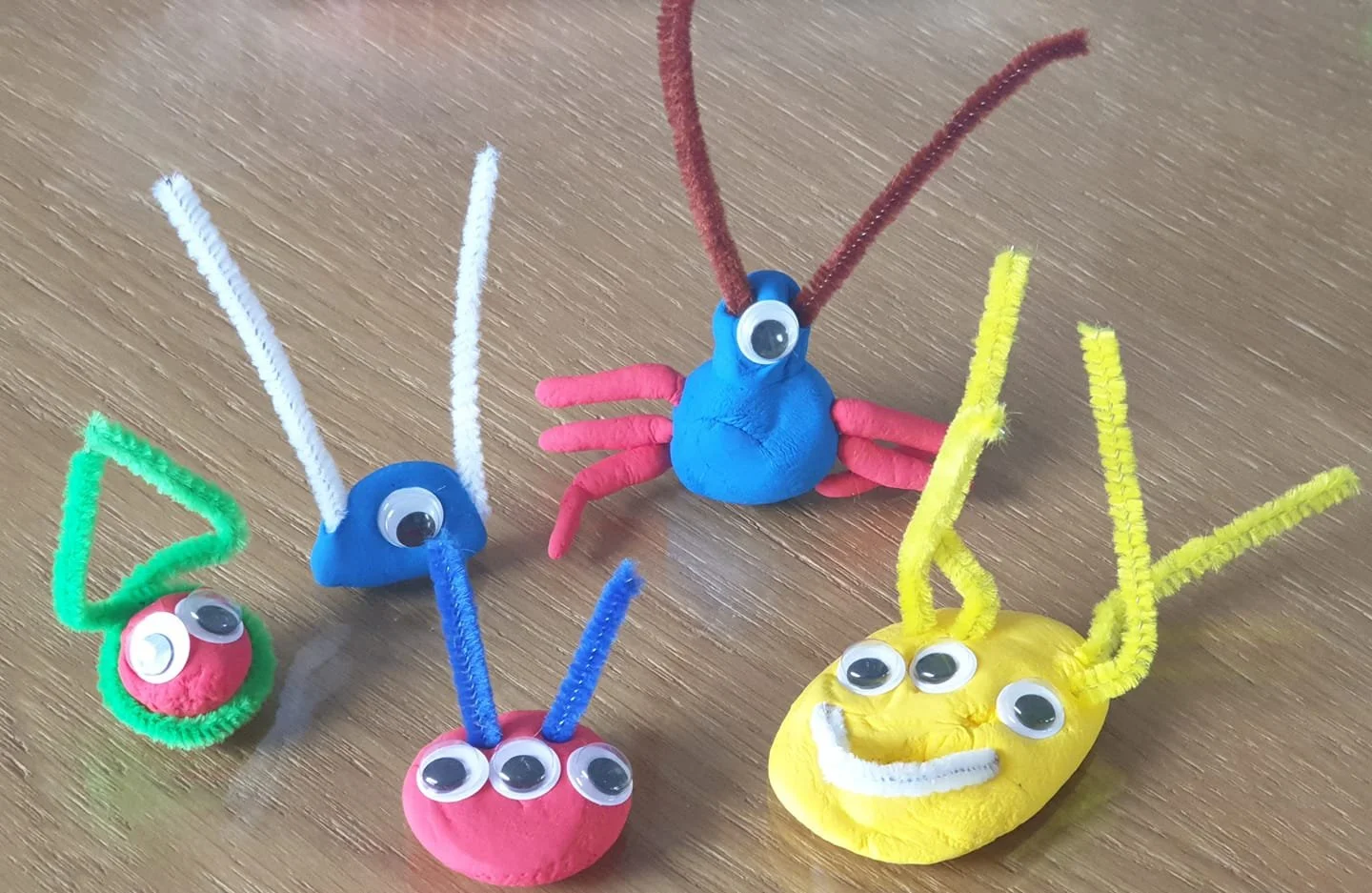
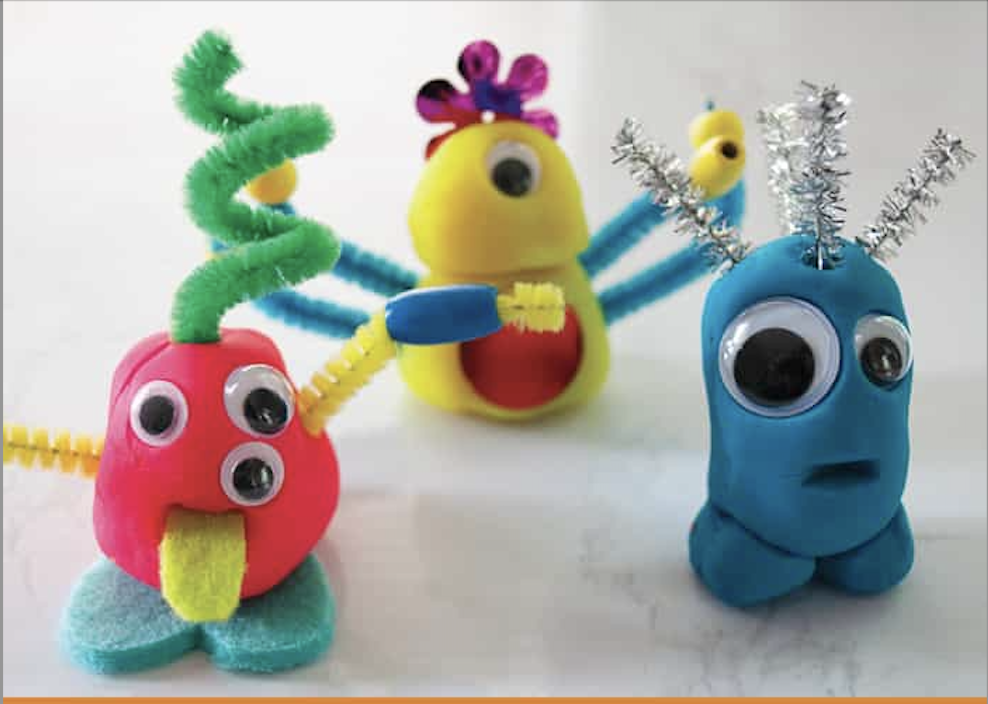
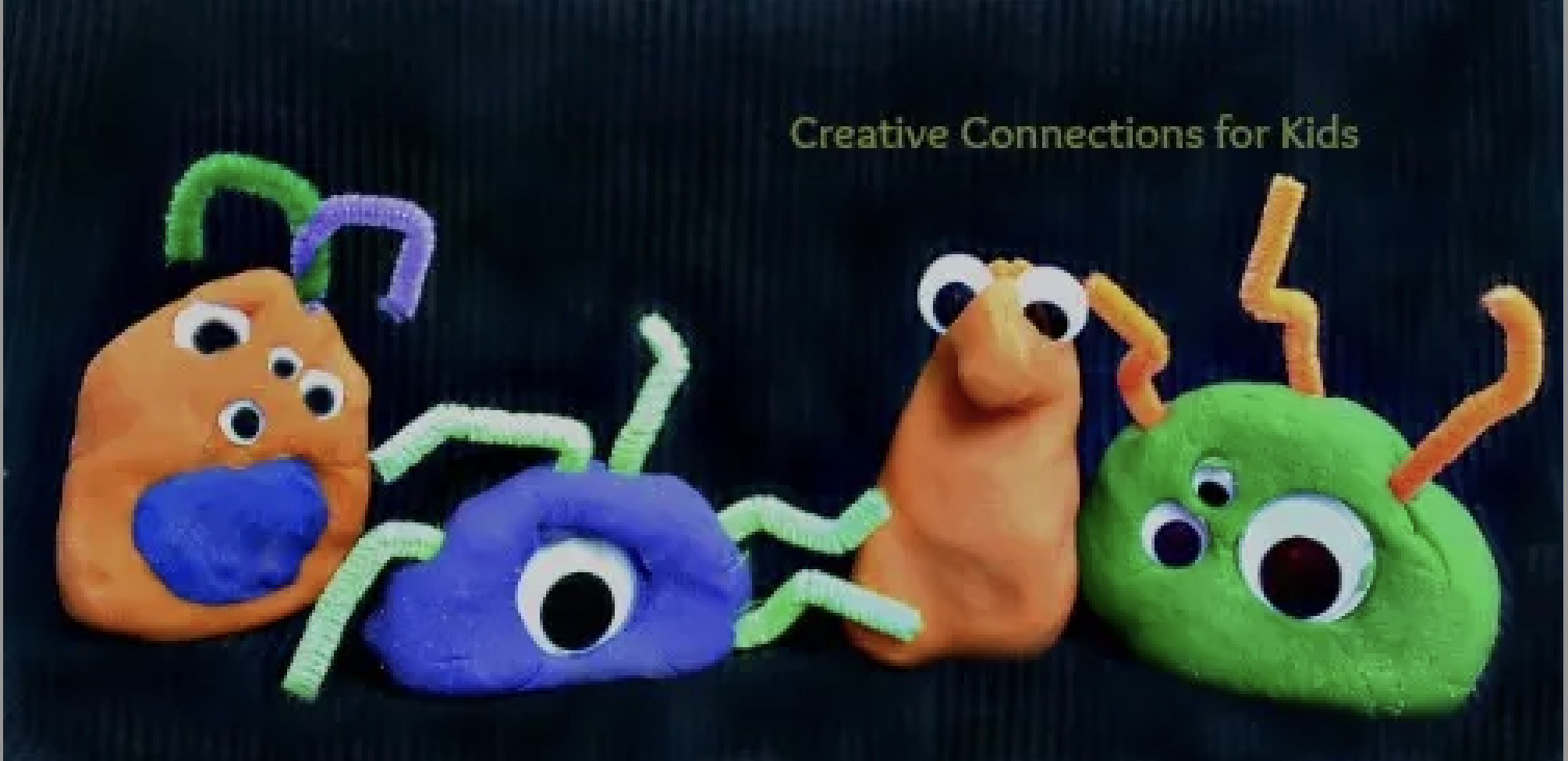
How do you make a play dough monster?
When kids are playing with play dough, they’re:
Building fine motor strength which is essential for building up the muscles used for handwriting
Using their imagination to build, shape, mold, and create
Exploring color theory by mixing colors together
Learning about measurement if following a homemade play dough recipe with you
Practicing vocabulary skills by narrating as they play
Using their tactile sense by exploring a new sensory material
Set out your play dough and accessories.
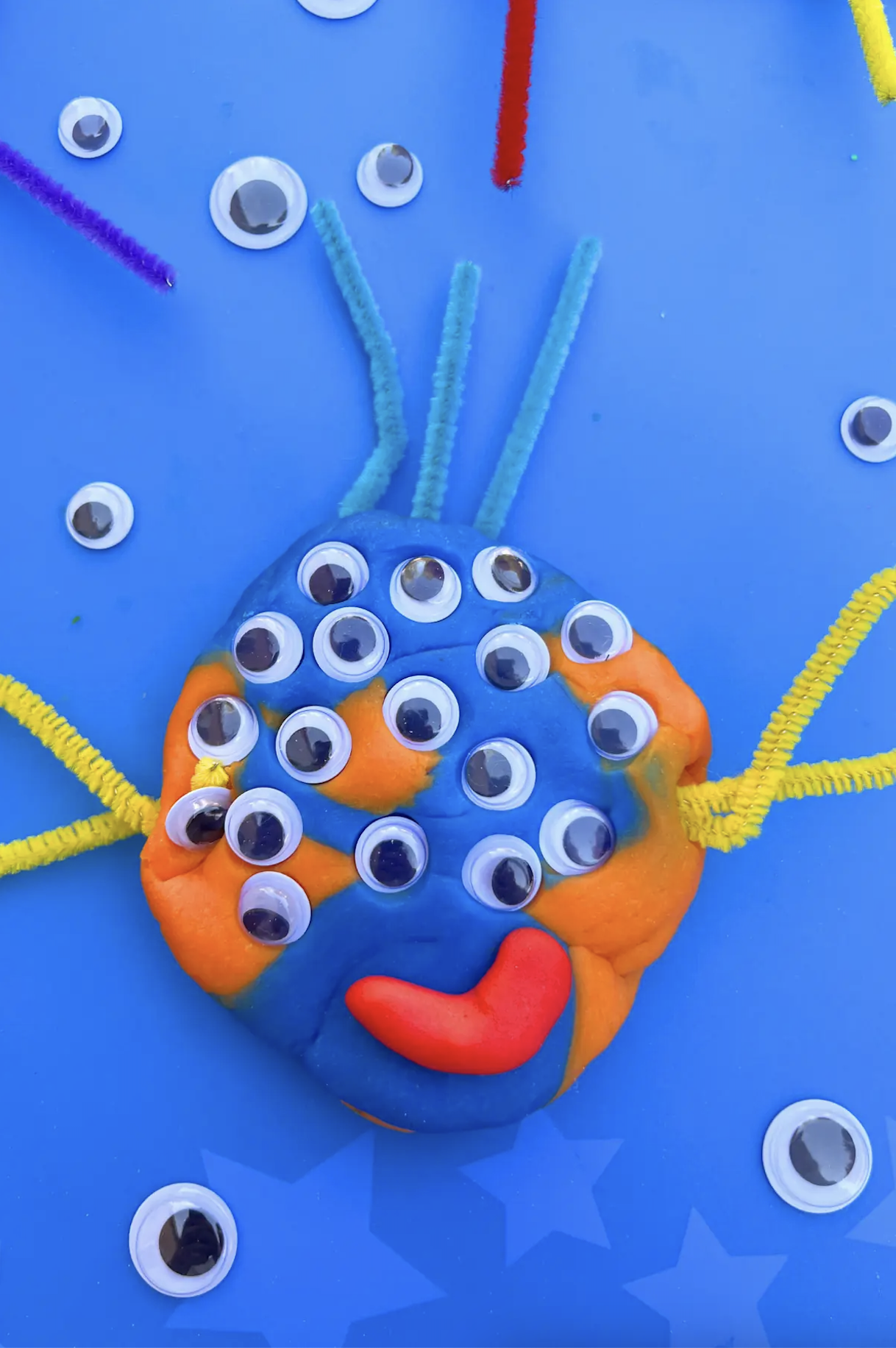
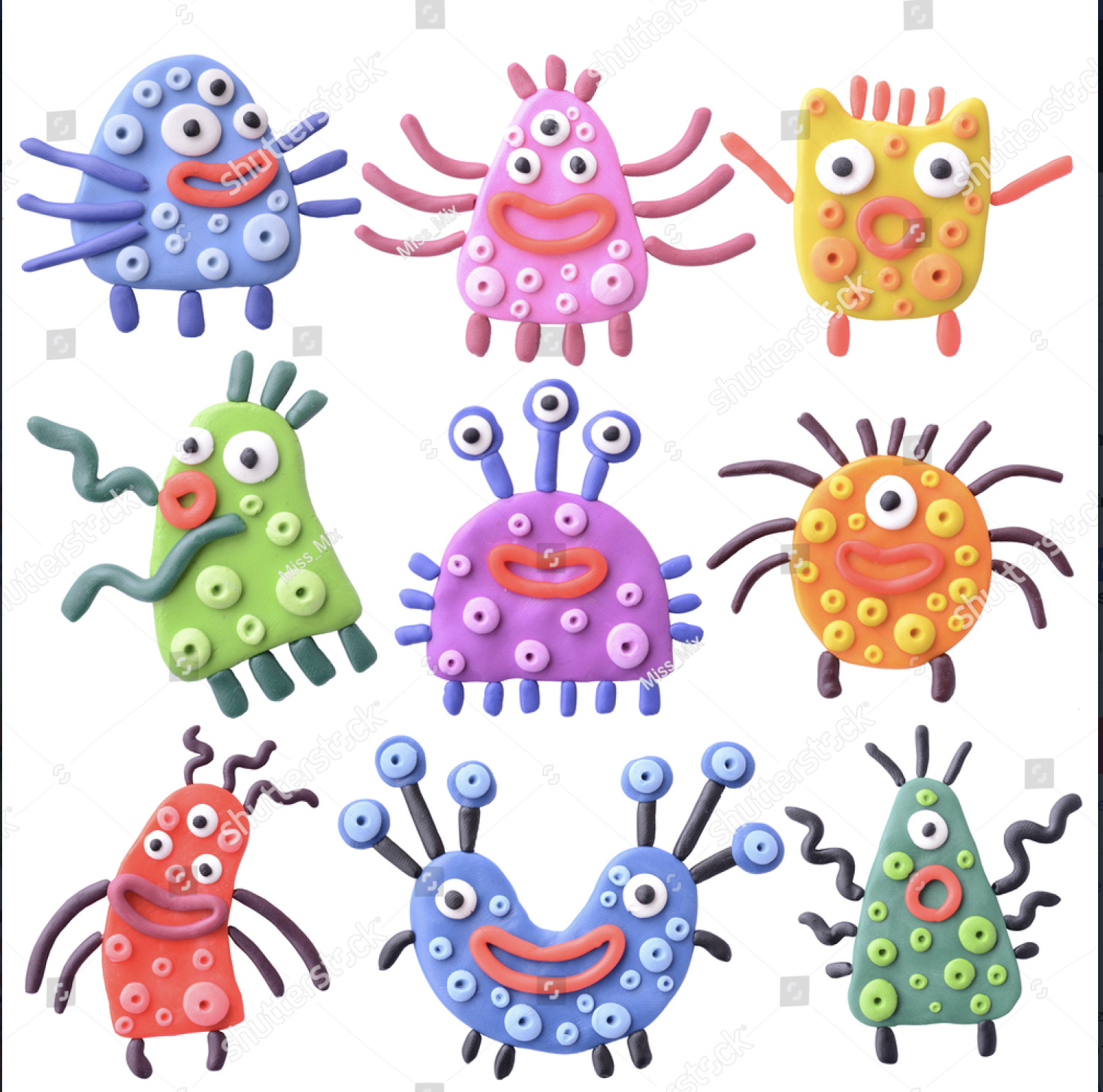
Invite your kids to use their imagination to create adorable, happy, goofy play dough monsters.
Your kids will have a blast adding silly amounts of eyes, arms, and legs to their marvelous monsters.
How to clean up play dough monsters
Your child might want to keep their play dough creations, in which case you’ll only need to clean up the extra supplies.
In a preschool setting, our kids FLY through googly eyes and pipe cleaners, so at the end of play time, we have the kids deconstruct the monsters and put all the supplies together.
Then, the next day, we have the same amount of materials, and kids can make monsters all over again.
You might wonder, “Will they still want to make monsters if they’re just going to get taken apart at the end?” and the answer is yes. It’s like a block center: when done, the blocks get put back so they’re ready to be played with again the next day.